

Kratom nausea: spot early signs and choose lab tested, lower doses
6 September 2026

Yes, kratom can cause nausea, and it’s one of the most commonly reported side effects among users. It’s usually dose-dependent, meaning it happens more often and more severely at higher amounts. If nausea sets in, stop taking kratom, sit upright or lie down, sip water slowly, and try ginger or an antacid. Call emergency services if vomiting won’t stop, you feel faint, or breathing becomes difficult.
TL;DR:
- Most kratom nausea occurs within the first hour of ingestion and is dose-dependent, increasing significantly above 5 grams.
- Contaminated or inconsistent products and co-use with alcohol or sedatives can greatly exacerbate gastrointestinal side effects.
- Starting with a low dose, brewing kratom as tea, and avoiding fast-dosed powders on an empty stomach reduce nausea risk effectively.
- Persistent or severe nausea, especially with symptoms like vomiting with blood, difficulty breathing, or confusion, requires urgent medical attention.
- Lab-tested kratom batches with verified alkaloid content and no contaminants lower the likelihood of nausea and toxicity over long-term use.
Table of Contents
- What kratom nausea actually looks like
- Why kratom causes nausea: dose, pharmacology and contaminants
- How to prevent kratom nausea before and after dosing
- When nausea signals toxicity or overdose
- Managing nausea during kratom withdrawal
- Why lab-tested kratom lowers your nausea risk
- Long-term effects of repeated kratom-induced nausea
- Safer ways to take kratom if nausea is a recurring problem
- Our view on managing kratom nausea responsibly
- Choosing a lab-tested strain to lower your risk
- Sources
What kratom nausea actually looks like
Nausea rarely arrives alone. Most people describe a cluster of symptoms that build together: queasiness, vomiting, crampy stomach pain, sweating, and a lightheaded, dizzy feeling that makes standing up unpleasant. Some people also report a headache or general malaise that trails behind the stomach symptoms rather than starting with them.
Timing matters here. If nausea is going to hit, it usually shows up within the first hour of taking kratom, though it can take a few hours to peak, particularly if you’ve eaten recently or taken a larger dose than usual. For most people, a single-dose reaction settles within a few hours once the peak alkaloid effects pass. It’s uncomfortable, but it’s rarely dangerous on its own.
The scale of the problem is bigger than most new users expect. A narrative review of kratom’s health effects found that 78.1% of users who reported any negative reaction described stomach-related problems as part of it. Poison centre data from 2011 to 2017 recorded nausea in 14.7% of adult cases and vomiting in 12.9%, making gastrointestinal upset one of the most frequently logged complaints tied to kratom use.
Statistic snapshot: Nearly four in five kratom users who report a bad reaction say it involves their stomach, and poison centres logged nausea and vomiting in roughly one in seven and one in eight adult cases respectively.
A published case illustrates how far this can go for someone with no tolerance built up. A case report of intractable vomiting following naïve kratom ingestion describes a woman with no prior kratom exposure who developed vomiting so persistent it required multiple rounds of intravenous anti-emetics and fluids before it resolved. Symptoms to watch for that suggest you’re dealing with a straightforward dose reaction rather than something more serious include:
- Nausea and vomiting within one to a few hours of dosing
- Cramping or crampy abdominal pain rather than sharp, localised pain
- Sweating and flushing
- Dizziness or a lightheaded feeling when standing
- Symptoms that ease with rest, fluids, and time rather than worsening
Why kratom causes nausea: dose, pharmacology and contaminants
Nausea from kratom comes down to how its two main alkaloids, mitragynine and 7-hydroxymitragynine, behave in your body. Both act on opioid receptors, but they also interact with adrenergic and serotonergic systems, and that combination is part of why kratom can feel stimulating and sedating at once. A pharmacology review of kratom alkaloids explains that this multi-receptor activity is exactly what produces gastrointestinal upset alongside the effects people are actually chasing, whether that’s energy, pain relief, or calm.
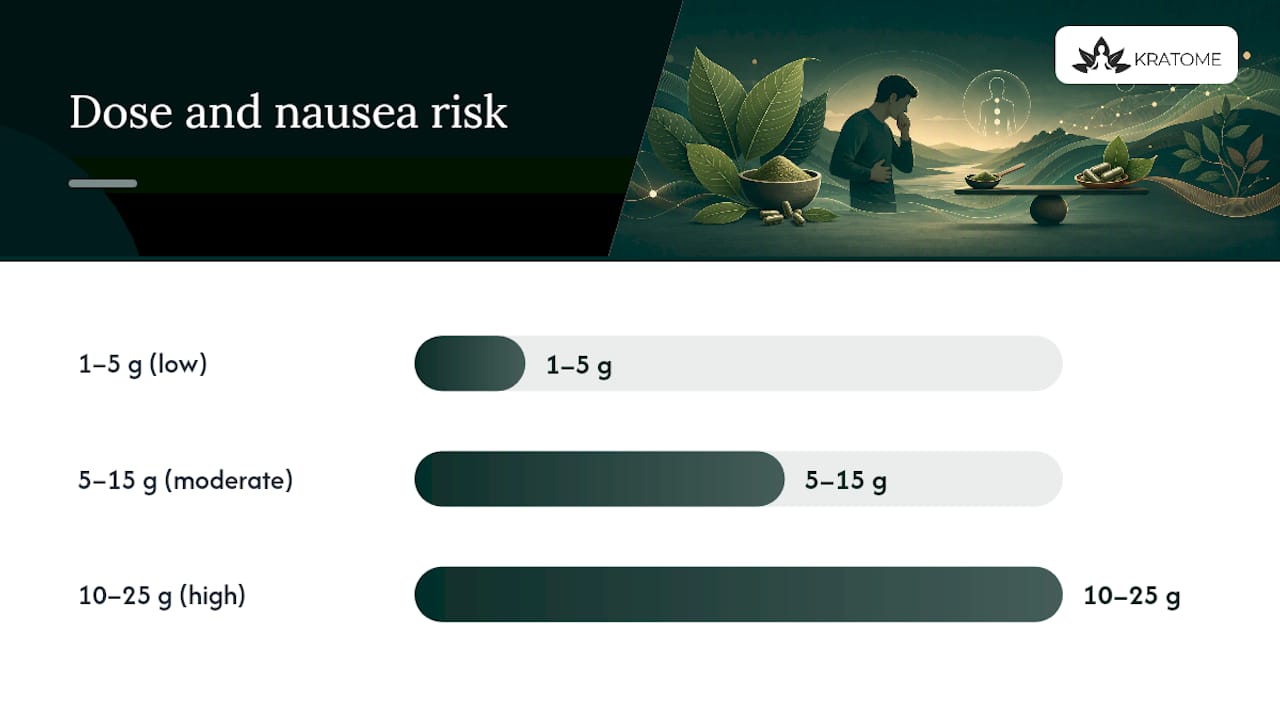
Dose is the biggest lever you control. Clinical guidance on kratom’s dose-dependent effects breaks the pattern down roughly like this:
- 1 to 5 grams: stimulant-type effects, generally the lowest nausea risk
- 5 to 15 grams: sedative, opioid-like effects, where nausea becomes more common
- Above roughly 8 grams: a noticeably higher risk of a broader toxidrome, not just nausea
Kratom’s large sedating doses, in the 10 to 25 gram range described by the European Union Drugs Agency’s kratom profile, can trigger an initial wave of sweating, dizziness and nausea before the sedative and euphoric effects take over. The nausea isn’t a side plot. It’s the body’s early response before the rest of the effect arrives.
Product quality complicates all of this. Kratom remains unregulated in many markets, and a review of kratom toxicities and case studies documents contamination with heavy metals and pathogens including Salmonella in some products, alongside wildly inconsistent alkaloid concentrations between batches. If you take what you think is your usual dose but the batch is stronger than the last one, your body reacts as though you’ve overdone it, even though you followed your own routine exactly.
Co-ingestion muddies attribution further. Case series reviewing ED presentations after naïve kratom ingestion note that many nausea and vomiting cases involve alcohol, opioids, or benzodiazepines taken alongside kratom, and standard hospital drug screens typically don’t detect mitragynine at all. If you’ve mixed substances, it’s genuinely hard for a clinician, or for you, to know which one is driving the nausea.
How to prevent kratom nausea before and after dosing
Most nausea is preventable with better pacing rather than avoiding kratom altogether. The single biggest mistake newer users make is treating their first dose like their eventual “normal” dose, when the body hasn’t had a chance to gauge sensitivity yet.
- Start low. Begin around 1 gram and wait a full session before deciding whether to increase it. Going straight for 5 or more grams as a first dose is the most common cause of the intense, “naïve overdose” style of vomiting seen in emergency reports.
- Titrate slowly. Increase in small increments over multiple sessions rather than days. Your tolerance and sensitivity to nausea change as you go, and rushing the process removes your only early-warning signal.
- Brew it rather than toss and wash it. Taking kratom as a tea, or with a light snack, tends to sit better than swallowing powder on an empty stomach. The toss-and-wash method concentrates the alkaloids and irritates the stomach lining faster than a diluted tea does.
- Skip the alcohol and sedatives. Combining kratom with either amplifies gastrointestinal and central nervous system effects, and it’s one of the most common contributors to severe nausea cases.
- Reach for ginger or an antacid at the first sign of queasiness. Ginger chews or ginger tea are a genuinely effective first response for mild nausea, and an over-the-counter antacid or H2 blocker can settle acid-related discomfort. Save prescription anti-emetics for cases where OTC options aren’t cutting it, and check with a pharmacist first if you’re on other medications, since some anti-emetics interact with opioid-active substances.
- Hydrate, rest, and stay upright or semi-reclined. Lying flat can make nausea worse; sitting up or reclining slightly tends to help more.
Pro Tip: Keep a simple log of dose, product batch, and how you felt afterwards. Nausea that tracks consistently with a specific batch is a strong sign the product itself, not your dosing, is the problem.
If nausea persists beyond a few hours despite rest, fluids and ginger, that’s the point to consider contacting a clinician rather than waiting it out.
When nausea signals toxicity or overdose
Most kratom-related nausea is uncomfortable but self-limiting. A smaller number of cases cross into genuine toxicity, and knowing the difference matters. Red flags that warrant urgent medical attention include:
- Vomiting that won’t stop or that includes blood
- Severe dizziness, fainting, or an inability to stay upright
- Breathing that feels shallow, slow, or laboured
- Confusion, unusual drowsiness, or seizures
- Signs of dehydration such as a dry mouth, minimal urination, or sunken eyes
Emergency department care for kratom-related nausea is largely supportive. Clinical guidance from Poison describes standard treatment as intravenous fluids paired with anti-emetics such as ondansetron or promethazine, plus a period of observation. In isolated ingestion cases, without other substances involved, some patients are discharged after a period of observation once symptoms settle.
Statistic snapshot: Clinicians treating isolated kratom ingestion have discharged patients after around six hours of observation once vomiting and other acute symptoms resolve, according to Poison.org.
Naloxone is sometimes considered if respiratory depression develops, though evidence supporting its effectiveness for kratom specifically remains limited. One more practical wrinkle: standard hospital urine drug screens usually miss kratom’s alkaloids entirely, so if you or someone you’re with needs emergency care, tell the clinical team directly what was taken, roughly how much, and when. Contacting a poison control centre is worthwhile even for moderate symptoms. They’ll typically ask for the product name, estimated dose, time of ingestion, and anything else taken alongside it.
Managing nausea during kratom withdrawal
Withdrawal-related nausea is a different problem from acute-dose nausea, and it’s easy to confuse the two. According to the EUDA’s kratom drug profile, withdrawal symptoms in regular users typically begin 12 to 24 hours after the last dose and usually fade within a week. Nausea during this window is usually accompanied by:
- Muscle cramps and general body aches
- Sweating and chills
- Insomnia
- Anxiety or irritability
The instinct to take more kratom to settle withdrawal nausea is understandable, but clinical guidance is consistent on this point: doing so only prolongs dependence rather than resolving the underlying problem. Supportive measures such as hydration, rest, and OTC anti-nausea options help more sustainably. For anyone finding withdrawal symptoms difficult to manage alone, a clinician can offer options ranging from symptomatic medication to structured tapering support.
Why lab-tested kratom lowers your nausea risk
Inconsistent alkaloid concentrations and undisclosed contaminants are two of the most preventable causes of kratom-related nausea, and both come down to what’s actually in the product you bought. Independent batch testing is the only reliable way to rule out heavy metals, pathogens, or an unexpectedly potent alkaloid load before you take a dose based on guesswork.
Some vendors address this by sourcing kratom carefully: independently lab-testing every batch, selecting mature leaves, and controlling drying to reduce variability that catches new users off guard.
Before buying from any vendor, a short checklist helps:
- Ask for the batch’s certificate of analysis (COA), not just a general lab-testing claim
- Avoid vendors who won’t disclose sourcing or testing methodology
- Start with a small dose even on a trusted, lab-tested product, since individual sensitivity still varies
Long-term effects of repeated kratom-induced nausea
Occasional nausea after a rough dose is one thing. Repeated nausea, session after session, is a signal worth taking seriously rather than pushing through. Chronic gastrointestinal irritation can affect appetite and nutrient intake over time, and people who regularly push past nausea to keep dosing often end up in a cycle where escalating amounts are needed to get the same effect, which raises both nausea frequency and overall toxicity risk.
There’s also a practical cost that’s easy to overlook: repeated vomiting causes fluid and electrolyte losses, and doing this often, even in mild episodes, adds up. It can leave you fatigued, affect kidney function over the long run, and make you more sensitive to dehydration during ordinary illness or heat.
Persistent nausea is frequently a sign that something specific needs to change, not just something to tolerate. That might mean the dose is too high for your current tolerance, the product’s alkaloid content doesn’t match what you expect, or your body simply isn’t suited to kratom at the frequency you’re using it. Recognising this pattern early, rather than a year into regular use, gives you far more room to adjust before it becomes a bigger health issue.
If nausea is a near-constant companion rather than an occasional side effect, that’s worth raising with a healthcare professional, particularly if it’s accompanied by weight loss, ongoing fatigue, or changes in bowel habits.
Safer ways to take kratom if nausea is a recurring problem
Switching how you consume kratom often does more for nausea than switching the strain. The toss-and-wash method, where powder is swallowed dry and washed down with liquid, delivers a concentrated hit of alkaloids straight to an empty stomach, which is precisely the setup for nausea.
Brewing kratom as a tea slows that delivery and dilutes the dose across a larger volume of liquid, which tends to sit far more comfortably. Simmering the powder gently rather than boiling it hard helps preserve the alkaloid content while still making a tea that’s gentler on the stomach than raw powder.

Taking kratom with a small snack, rather than on a fasted stomach, is another straightforward adjustment. It slows absorption slightly and gives your stomach something to work with besides the kratom itself. Capsules are worth considering too, since they delay dissolution slightly compared to loose powder and remove the taste, which for some people is itself part of what triggers queasiness.
Whichever method you choose, the dosing fundamentals stay the same: lower doses, consistent products, and enough time between sessions for your body to reset. Rotating strains without also rotating your approach to dose and timing rarely solves a nausea problem on its own; the method of consumption and pacing tend to matter more than which strain is in your hand.
Our view on managing kratom nausea responsibly
Nausea gets treated as an afterthought in a lot of kratom discussion, mentioned briefly and then waved off as something you build tolerance to. That undersells it. Nausea is frequently the body’s most honest signal that something about the dose, the product, or the pacing is wrong, and dismissing it repeatedly is how mild discomfort turns into a genuine toxicity event.
We’d rather readers treat nausea as useful information than as a hurdle to push through… If symptoms are severe or you’re unsure, a healthcare professional should always be your first call, not a forum thread.
— Kratome
Choosing a lab-tested strain to lower your risk
Reputable vendors often test every batch independently before sale, which is the most direct way to rule out contamination and potency swings that drive many cases of nausea.

If pain relief is your goal, Red Maeng Da is a good starting point at a low dose, since its sedative profile tends to sit gently when introduced slowly. For a more balanced lift without the intensity of a pure stimulant dose, Green Maeng Da offers a middle ground many users find easier on the stomach than higher sedative doses. If you’re sensitive to nausea generally, Yellow Maeng Da has a reputation as a milder, more mellow option worth trying before moving to stronger strains.
Whichever you choose, check the batch’s certificate of analysis on our lab reports page before you buy, start at the low end of the dosing range, and give your body time to respond before increasing. Browse the full range and place an order through Kratome whenever you’re ready to start.
This article is general information, not a substitute for advice from a qualified doctor. Consult a qualified healthcare professional about your own circumstances before acting on anything here.
Sources
The clinical picture behind this article draws on a narrative review of kratom’s health effects and poison centre statistics, a documented case report of intractable vomiting after naïve kratom ingestion, the European Union Drugs Agency’s kratom drug profile, and clinical guidance from Poison.org’s kratom overview. Each source is worth reading directly if you want the full clinical detail behind the summaries above.
- Health effects associated with kratom (narrative review)
- Poison
- Kratom drug profile | European Union Drugs Agency (EUDA)
Recommended
Related reading

6 September 2026 · en
Frequency, Not Dose: Long Term Kratom Risk and Lab Tested Transparency
Read article
5 September 2026 · en
Empieza de forma segura: dosis de kratom de 0,5–1 g para principiantes; consulta los informes de laboratorio
Read article
4 September 2026 · en