

Formulation First Kratom Taper for Soapmakers With QC Checkpoints
8 September 2026

A kratom taper plan for soapmaking is a structured method for reducing the botanical powder fraction across a series of test batches so you can measure color retention, texture, and stability without wasting stock. The immediate step: pick a starting inclusion rate under 2% of your non-water ingredients, weigh it on a precision scale, produce a small batch, and patch-test the cured bar before adjusting the next one.
TL;DR:
- Keeping botanical powder under 2% of non-water ingredients is recommended to avoid excessive speckling and color fading.
- Adjusting the kratom concentration gradually across four to five batches helps identify the lowest effective inclusion rate.
- Using slurry mixing generally provides the most even distribution and minimal clumping of kratom in soap.
- Patch tests at 1, 4, and 8 weeks are essential for monitoring color retention, texture, and skin reactions before scaling up production.
- Precise measurement with a gram scale and proper storage are crucial for reproducibility and maintaining quality in a kratom soap taper plan.
Table of Contents
- Building a Kratom Taper Schedule for Soap Batches
- Formulation Tips for Adding Kratom Powder to Soap
- How Do You Patch-Test and QC a Botanical Soap Bar?
- Safe Handling, Storage, and Labeling for Botanical Soap
- What Are the Benefits and Goals of a Kratom Taper?
- Common Issues During a Botanical Taper and How to Handle Them
- How Long Should a Kratom Soap Taper Take?
- Staying on Track: Motivation and Progress Tracking for a Multi-Batch Taper
- When Should You Get Outside Input on Your Taper?
- Risks and Limitations Worth Knowing Before You Taper
- Approach to Botanical Sourcing and Testing
- Tools That Make a Kratom Soap Taper Repeatable
- Sources
Building a Kratom Taper Schedule for Soap Batches
A taper schedule works because it turns guesswork into a controlled series of small experiments. Instead of committing an entire production run to one botanical ratio, you step the concentration down (or up, depending on your starting point) across four or five batches and log what changes at each stage.
Choosing your starting inclusion rate
Formulators generally recommend keeping powdered botanicals under roughly 2% of the total non-water ingredient weight, with practical starting points around 1 teaspoon to 1 tablespoon per pound of base. That range gives visible color and texture without overloading the bar or causing excessive speckling. Kratom powder, like most leaf botanicals, behaves differently depending on particle size and strain, so treat that starting range as a baseline, not a fixed rule.
A sample four-step taper
- Batch 1 (baseline): For a 1 lb (about 454 g) batch, add 1 teaspoon (roughly 3 to 4 g) of kratom powder. For a 5 lb (2.5 kg) batch, scale to about 5 teaspoons (15 to 20 g).
- Batch 2: Reduce to three quarters of Batch 1’s weight. Note any change in color depth or speckling.
- Batch 3: Reduce to half of Batch 1’s weight. Check whether the bar still holds visible botanical texture.
- Batch 4: Reduce to one quarter of Batch 1’s weight, or hold steady if Batch 3 already looks thin on color.
Space production of each batch by one to two weeks so you have time to observe curing, color shift, and early stability before committing to the next ratio.
Record-keeping checklist
Every batch needs a paper or digital record. At minimum, track:
- Batch ID and production date
- Scale used and calibration check
- Exact weight of botanical added, recorded to the gram
- Base recipe and total batch weight
- Visual notes at 1 week, 4 weeks, and cure completion
- Patch-test results and tester feedback
Formulators who prepare a batch-by-batch record with weight, source, and lab reference find it far easier to trace a color or texture problem back to a specific step.
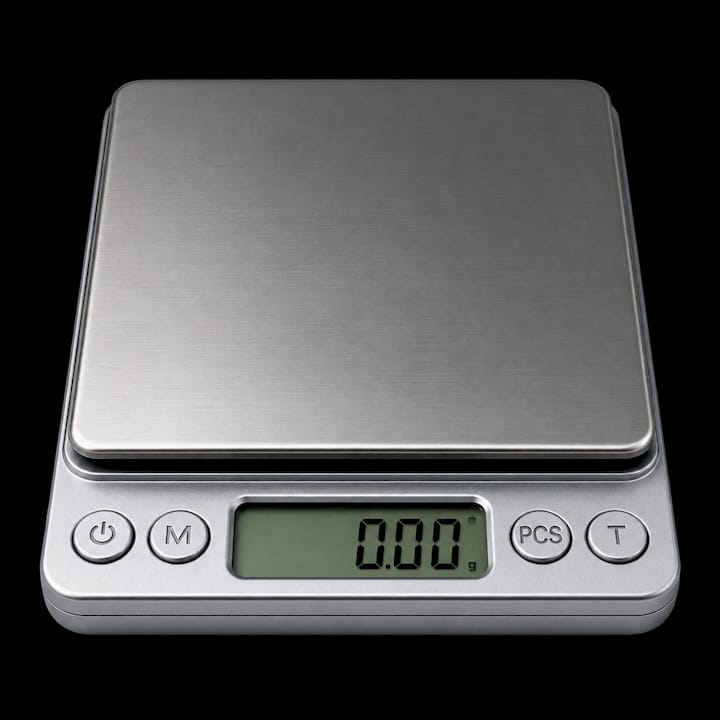
Pro Tip: Weigh your botanical powder before you weigh your lye solution. Kratom powder settles and compacts in storage, so a scoop measured by volume can vary by a gram or more between sessions. A gram scale error at this stage throws off every batch that follows.
Formulation Tips for Adding Kratom Powder to Soap
How you introduce kratom powder into your base matters as much as how much you use. Three methods dominate botanical soapmaking, and each solves a different problem.
Slurry method: Mix the powder with a small amount of oil or water before adding it to your base. This is the most reliable way to avoid clumping and uneven speckling, since the powder disperses through the liquid instead of dropping in dry and clumping on contact.
Add-at-trace: Stir the powder directly into your soap batter once it reaches trace (the point where it thickens enough to hold a trail on the surface). This works well for cold-process bars but needs fast, even mixing to prevent streaking.
Oil infusion: Steep the powder in a carrier oil for several days before formulating, then use the infused oil as part of your recipe. This softens the visual intensity but can shift the final color toward a muted tone rather than flecked texture.
- Slurry method: best for even color distribution, minimal clumping
- Add-at-trace: best for visible speckling and texture
- Oil infusion: best for a smoother, more subtle tint
Botanical powders sink in some bases if particle size is too coarse, so many formulators pair kratom with a light gel or thicker trace to keep it suspended. Saponification heat can also shift color, sometimes darkening a bar over the first 24 to 48 hours, which is normal and worth noting in your batch log rather than treating as a failure.
Pro Tip: Run a split batch: same base, same total weight, but half mixed by slurry and half by add-at-trace. Cure both side by side. The difference in speckling and color consistency after four weeks tells you more than any single-method test ever will.
Formulators who work with botanical powders tend to market the physical attributes, color, texture, mild exfoliation, rather than unverified wellness claims, and that principle applies directly to kratom-based bars.
How Do You Patch-Test and QC a Botanical Soap Bar?
A taper plan only works if you’re actually measuring something at each step. Build your quality-control checkpoints around three time markers: 1 week, 4 weeks, and 8 weeks after production.
- Week 1 check: Inspect color depth, surface texture, and any early speckling shift as the bar starts to cure.
- Week 4 check: Reassess color retention, note any fading or darkening, and check for odor changes that might signal rancidity in carrier oils.
- Week 8 check: Confirm lather quality, final texture, and whether the botanical inclusion still reads visually consistent with your target.
For patch testing finished bars, ask a small group of external testers, five to ten people is a reasonable sample for a hobby-scale run, to apply the bar to a small area of skin and observe for 24 to 48 hours. Document what they report in plain terms: no reaction, mild redness, or discontinued use.
- No reaction reported: continue the taper as planned
- Mild redness or irritation from multiple testers: stop the taper, hold the current ratio, and reformulate before advancing
- Rapid color loss between week 1 and week 4: increase the botanical concentration slightly or switch incorporation methods rather than assuming the recipe is a failure
Keep a simple template for every test: batch ID, tester count, observation window, and outcome. That record is what turns a one-off experiment into a reusable kratom taper schedule you can apply to future botanical runs.
Safe Handling, Storage, and Labeling for Botanical Soap
Handling kratom powder safely starts with the same precautions you’d apply to any fine botanical ingredient. Safety data sheets for comparable soap powders recommend wearing basic PPE, working in ventilated space, and avoiding eating or drinking while handling the raw material.
- Store powder in a cool, dry, dark space, away from heat sources and direct light
- Keep containers airtight to minimize air contact and moisture exposure
- Wash hands and work surfaces after handling raw powder
- Label finished bars with the botanical ingredient name, batch code, and “external use only” phrasing, never wording that implies ingestion
Botanical-based bars typically hold their intended qualities for six to 12 months when stored below 50% humidity. Beyond that window, color and texture tend to fade faster than the base soap itself. Always check your local cosmetic safety assessment requirements before selling finished goods, since labeling rules vary by market across the EU and UK.
What Are the Benefits and Goals of a Kratom Taper?
The point of tapering isn’t just caution, it’s data. A stepped reduction across batches gives you a controlled comparison instead of a single guess, and that comparison is what protects your inventory and your reputation as a formulator.
Tapering the botanical fraction lets you find the lowest inclusion rate that still delivers the visual and textural result you want. Overloading a bar with powder doesn’t necessarily produce better color. It often produces uneven speckling, faster fading, or a gritty texture testers dislike. A taper exposes that ceiling before you commit to a full production run.
There’s also a cost angle. Kratom powder isn’t free, and running a 5 lb batch at your highest guessed ratio, only to find it fades within a month, wastes both material and time. Stepping down from a baseline batch means your worst-case loss is a small test run, not a full inventory of unsellable bars.
Finally, a taper builds a documented history you can hand to a retailer or wholesale buyer. When a buyer asks why your bars use a particular concentration, “we tested four ratios and this one held color and texture best through an eight-week cure” is a far stronger answer than a guess. That kind of batch-tested consistency is exactly what separates a hobby operation from one that retailers trust with repeat orders.
Common Issues During a Botanical Taper and How to Handle Them
Reducing or adjusting a botanical concentration across batches almost always surfaces a few recurring issues, and knowing what to expect saves you from misreading a normal variation as a formulation failure.
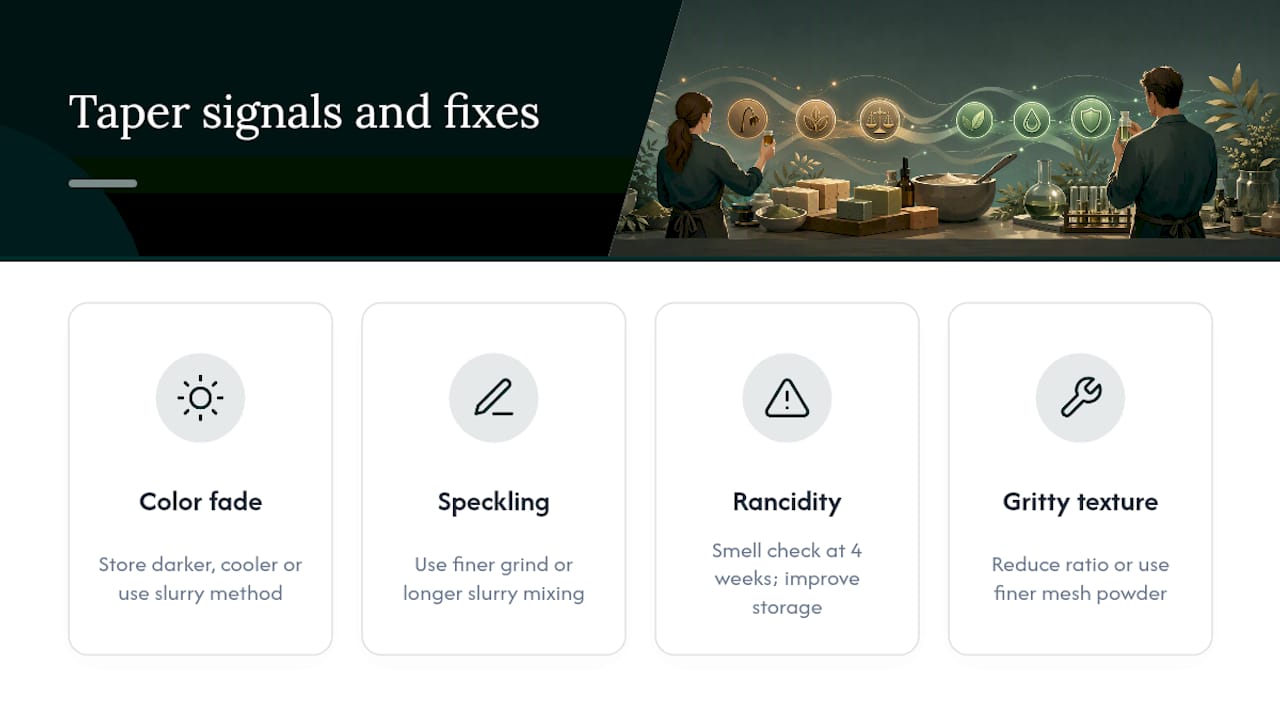
Color fade is the most common issue. Kratom powder’s green or tan tones can lighten noticeably over the first few weeks of cure, especially in glycerin-based soaps exposed to light. If this happens faster than expected, the fix usually isn’t more powder. It’s better storage during cure (darker, cooler) or a switch to the slurry method for more even pigment distribution.
Speckling inconsistency shows up when powder isn’t fully dispersed before pouring. Testers or buyers may see this as an aesthetic flaw rather than a texture feature. A finer grind or a longer slurry mixing time typically resolves it.
Rancidity risk climbs if your base oils sit too long before the botanical is incorporated, or if storage humidity runs high. This isn’t unique to kratom, but a botanical-heavy bar can mask early rancid odor behind its own scent, so a dedicated smell check at the 4 week mark matters.
Texture grit happens with coarser powder grinds. If testers report an unpleasant feel rather than a pleasant mild exfoliation, reduce the batch ratio or move to a finer mesh powder before your next production step. None of these issues mean the taper failed. They’re exactly the kind of signal a staged batch plan is designed to catch early.
How Long Should a Kratom Soap Taper Take?
Most hobbyist and small-batch formulators complete a full four-batch taper over six to ten weeks, factoring in the one to two week observation window between each production step. That pace gives you enough cure time to catch color shift and rancidity signals before scaling up.
If you’re testing for a wholesale order or a retail launch, extend the window. Run each batch through the full eight-week QC cycle described earlier before finalizing your production ratio. Rushing a taper to hit a deadline is how color fade or texture problems slip past you and end up in a customer’s hands instead of your test log.
Frequency adjustments depend on what your checkpoints show. If Batch 2 already shows strong color retention and no texture complaints, you can skip straight to a half-step reduction for Batch 3 instead of moving in even quarters. Conversely, if a batch shows early fading or grit, hold that ratio for a second production run before moving forward. Treat the schedule as a framework, not a fixed calendar. A taper that moves in response to what you’re actually observing in cure and patch tests will always outperform one that just follows a preset timeline.
Staying on Track: Motivation and Progress Tracking for a Multi-Batch Taper
A four to five batch taper spread across two months is easy to lose track of, especially if you’re running it alongside regular production. The single most effective habit is keeping one shared log, whether a spreadsheet or a physical notebook, where every batch’s weight, date, and observation lives in one place instead of scattered across sticky notes and memory.
Photograph each batch at the same three checkpoints: right after unmolding, at the 4-week mark, and at final cure. Side-by-side photos make color fade and texture shift obvious in a way written notes alone often miss. Line them up in sequence and the pattern across your taper becomes immediately visible.
Set a fixed day each week to check on batches in cure rather than checking sporadically. A recurring Sunday review, for instance, keeps the process moving without demanding daily attention. Small, consistent check-ins beat long gaps followed by a rushed catch-up.
If you’re tapering toward a wholesale pitch or a market launch, give yourself a real deadline tied to that goal, not just “eventually.” A concrete target, ready to show three finalized ratios to a retailer by a set date, keeps the taper from drifting indefinitely while you wait for a “perfect” result that a controlled test schedule will never produce.
When Should You Get Outside Input on Your Taper?
Most formulation issues in a botanical taper are things you can diagnose yourself with a careful log and patch tests. But a few situations call for outside expertise rather than another round of guessing.
If patch testers consistently report skin irritation across multiple batches, regardless of concentration, that’s a signal to consult a cosmetic chemist or dermatology-adjacent professional rather than continuing to adjust the recipe on your own. Persistent irritation across ratios often points to a base ingredient interaction, not the botanical inclusion rate itself.
If you’re planning to sell finished bars commercially, a cosmetic safety assessor familiar with your local market, EU Cosmetic Product Safety Report requirements or the UK’s equivalent framework, should review your formulation before it reaches retail shelves. This isn’t a step a taper log replaces. It’s a separate compliance requirement that sits alongside your own QC process.
And if you’re unsure whether a particular botanical source or batch meets purity standards for cosmetic use, an independent lab report resolves that question far more reliably than visual inspection alone. Formulators sourcing kratom powder for soap should look for suppliers who provide batch-specific lab documentation rather than a single generic certificate covering an entire product line.
Risks and Limitations Worth Knowing Before You Taper
A taper plan reduces risk, but it doesn’t eliminate every variable you’ll encounter working with a botanical ingredient. A few limitations are worth naming plainly.
Botanical performance varies by source. Two batches of kratom powder from different growing regions or harvest periods can behave differently in the same recipe, even at identical weights. That’s part of why small-batch testing at each taper step matters more than trusting a single successful run to hold indefinitely.
Color and texture results don’t always transfer between soap bases. A ratio that performs well in a melt-and-pour glycerin base may behave quite differently in a cold-process bar, since saponification heat and cure time both influence how botanical powder settles and colors over weeks rather than days.
Shelf life is finite. Even a well-tapered, well-tested formulation degrades over time, typically within six to 12 months under good storage conditions, and faster under poor ones. A taper plan tells you what works at launch, not what holds up indefinitely on a shelf.
Finally, regulatory frameworks around botanical cosmetic ingredients continue to evolve across EU and UK markets. A formulation that clears review today may need a fresh look if labeling or ingredient disclosure rules change, so treat compliance review as a recurring check rather than a one-time box to tick.
Approach to Botanical Sourcing and Testing
Kratomvia sources kratom directly from growers in Southeast Asia and runs independent laboratory testing on every batch before it reaches a formulator’s workbench. That matters for a taper plan specifically because your QC checkpoints are only as good as the raw material feeding them. A batch with inconsistent purity will throw off your color and texture readings no matter how carefully you weigh and log each step.
The source also publishes guidance like Kratom Withdrawal: Symptoms & Safe Tapering, written to help consumers understand tapering as a concept, distinct from the formulation-focused batch tapering covered in this guide. Shipping is offered discreetly across Europe and the UK, a detail that matters to retailers and formulators who prefer to keep sourcing relationships private while they build out a product line.
Consistent lab documentation, batch to batch, is what lets a soapmaker trust that a color shift in cure is a formulation variable, not a raw material problem.
— Kratome
Tools That Make a Kratom Soap Taper Repeatable
None of the batch math above works without accurate measurement, and this is where a lot of hobbyist tapers quietly fall apart. Guessing weights by volume, a spoonful here, a pinch there, is exactly how a “half strength” Batch 3 ends up closer to two thirds of Batch 1’s concentration.
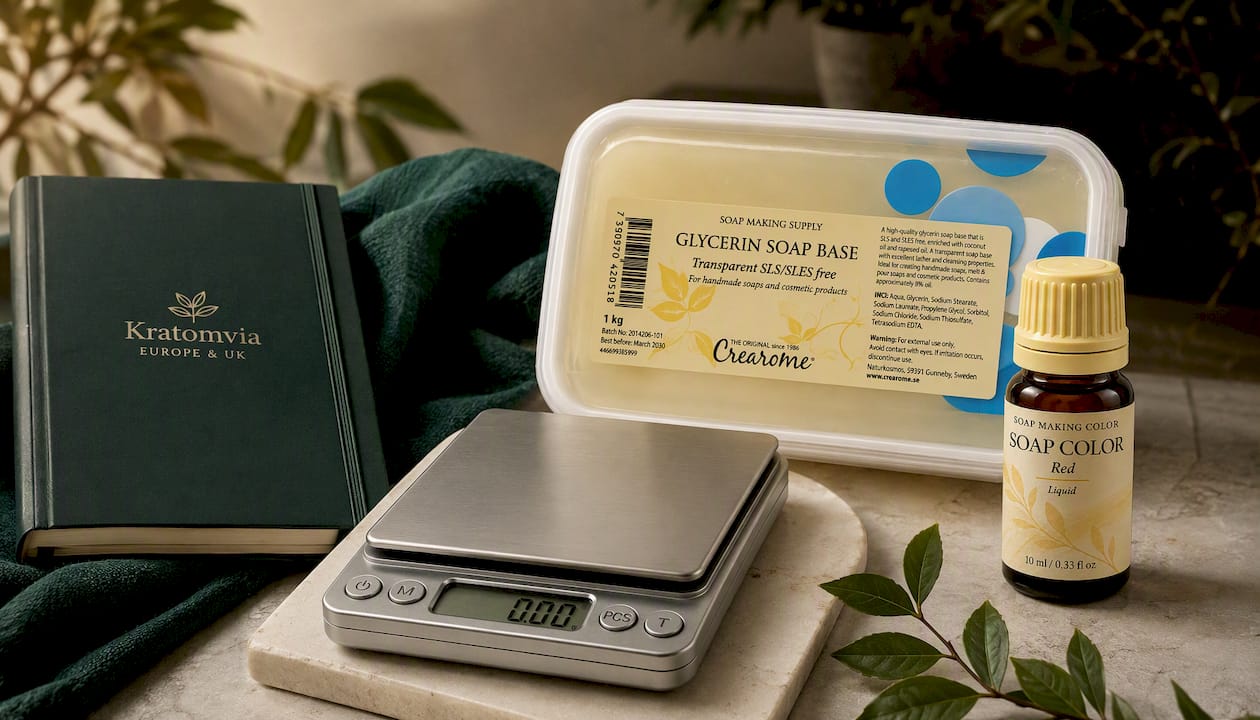
The Digital Precision Scale for Manufacturing gives gram-level accuracy for every step in the schedule outlined earlier, which is the difference between a taper you can actually reproduce and one you’re eyeballing. For split-batch trials comparing slurry against add-at-trace methods, the Transparent Glycerin Soap Base is SLS/SLES free and melt-and-pour ready, so you can run a full comparison without the added variables of cold-process saponification. And if you’re testing how botanical color holds up against a controlled pigment baseline, the Red Colorant for Soap Manufacturing gives a consistent reference point to measure fade against.
Start with the scale. Everything else in your taper log depends on it.
Sources
- Poison
- Soap Guild resources — lye safety and formulator guidance
- Crafter’s Choice™ Soap Nut Powder Safety Data Sheet — Wholesale Supplies Plus
- Herbs for Soap Making: What Works and What Fails — Hatton Naturals
Recommended
- How to Make Kratom Soap | DIY Guide
- Shea Butter Soap Base for Kratom Soap Making | Glycerin
- Glycerin Soap Base for Kratom Soap Making | SLS Free
- Transparent Glycerin Soap Base for Kratom Soap Making
Disclaimer: This blog is intended for educational and informational purposes only. The content provided is not intended to promote, recommend, or suggest human consumption of kratom or any other product. Our products are sold exclusively for their intended purposes as described on our website. This information should not be interpreted as medical advice, and we encourage readers to consult qualified professionals for any health-related questions.
Related reading

7 September 2026 · en
Mitragynine content varies by an order of magnitude: how to read COAs
Read article
7 September 2026 · en
Adults: 15 Minute Peppermint Relief for Headaches, Evidence and Safety
Read article
6 September 2026 · en