

Kratom and Alcohol
30 August 2026

Mixing kratom and alcohol is unsafe and should be avoided. Both are central nervous system depressants, and combining them creates additive sedation and unpredictable interaction risks that neither substance produces alone. If someone is breathing slowly, unresponsive, or has blue-tinged lips or skin after taking both, call emergency services immediately.
TL;DR:
- Most serious kratom exposures involving multiple substances, including alcohol, often result in hospital admission due to severe sedation and respiratory depression.
- Combining kratom with alcohol significantly increases the risk of profound sedation, slowed breathing, vomiting, and long-lasting consciousness loss.
- Kratom inhibits liver enzymes that metabolize alcohol, potentially raising blood alcohol levels and amplifying depressant effects unpredictably.
- Acute symptoms from mixing include severe nausea, dizziness, extreme drowsiness, and an increased risk of aspiration and blackout.
- Responsible use recommends avoiding any mixing of kratom with alcohol, especially concentrated extracts, and choosing lab-tested products with known alkaloid levels.
Table of Contents
- What happens when you mix kratom and alcohol: the clinical evidence
- Why the combination is so unpredictable: pharmacology and product variability
- Short-term symptoms and long-term harms from combined use
- Emergency signs, treatment options, and when to get help
- What Kratomvia does differently, and why it still doesn’t make mixing safe
- Selling kratom responsibly means saying this plainly
- Choosing tested kratom without the guesswork of unverified products
- Sources
What happens when you mix kratom and alcohol: the clinical evidence
Poison-centre surveillance gives a clear picture of what combining substances with kratom actually does to the body. According to poison centre data tracked by the CDC, roughly half of severe kratom exposures involving multiple substances required hospital admission. That is not a marginal risk sitting at the edge of a distribution. It is a coin-flip outcome for the more serious cases logged by poison control.
The same surveillance data found that most kratom-associated deaths involved multiple substances, alcohol frequently among them. Clinicians treating these cases tend to see a consistent cluster of presentations:
- Profound sedation that goes well beyond normal kratom drowsiness
- Slowed or shallow breathing (respiratory depression)
- Vomiting, with a real risk of aspiration in someone who is barely conscious
- Loss of consciousness that can last far longer than either substance alone would cause
Most kratom-related deaths involve more than one substance — a figure that should reframe how anyone thinks about “just having a drink” alongside a dose of kratom. Kratom alone rarely kills. Kratom stacked on top of alcohol changes the calculation entirely.
Why the combination is so unpredictable: pharmacology and product variability
Kratom’s active alkaloids, mitragynine and 7-hydroxymitragynine, act partly on opioid receptors, which is why kratom produces sedation and pain relief at higher doses. Alcohol works through an entirely different set of receptors but arrives at a similar destination: a slowed central nervous system. Layer the two together and the depressant effects don’t just add up, they compound in ways that are hard to predict from either substance’s profile alone.
There’s a second, quieter danger that most users never hear about. Kratom is known to inhibit the CYP3A4 and CYP2D6 liver enzymes, along with the P-glycoprotein transporter that helps clear drugs from the body. That inhibition can raise blood concentrations of alcohol and any other co-ingested substance, including medications a person might be taking for something unrelated entirely.
Product variability multiplies the risk further:
- High-potency extracts concentrate alkaloid content far beyond what a typical leaf powder delivers
- Adulterated or contaminated batches introduce unknown variables into an already unpredictable mix
- Dosing is rarely standardised across vendors, so “a normal dose” varies wildly from one product to the next
Pro Tip: If you use kratom at all, treat any product with an unclear alkaloid concentration as higher risk. Extracts and enhanced powders are not the products to experiment with alongside any other depressant, including alcohol.
Short-term symptoms and long-term harms from combined use
The short-term signs of mixing kratom and alcohol tend to appear within an hour or two, and they escalate faster than either substance would alone.
- Nausea and vomiting, often more severe than typical alcohol-only hangovers.
- Dizziness and impaired coordination, increasing fall and injury risk.
- Extreme drowsiness, sometimes tipping into a state that looks like sleep but is closer to sedation.
- Slowed breathing, the symptom that turns a bad night into a medical emergency.
- Aspiration risk, particularly if vomiting occurs while sedated.
- Blackout or loss of consciousness lasting longer than a typical alcohol blackout.
Long-term harms build with repeated mixing rather than appearing after one instance. Regular combined use is linked to dependence on one or both substances, and narrative reviews of kratom’s health effects document cardiovascular strain, liver stress, and worsening of underlying mental health conditions with sustained use. Pregnant people face additional neonatal risks that neither substance’s individual profile fully captures once combined.
Certain groups carry substantially higher risk from the outset: anyone taking benzodiazepines or opioids, people with existing respiratory or liver disease, and pregnant people. For these groups, even a small combined dose can tip into dangerous territory faster than the numbers above would suggest for a generally healthy adult.
Emergency signs, treatment options, and when to get help
Certain symptoms mean you stop weighing options and call emergency services immediately:
- Breathing that has slowed dramatically or stopped
- No response to voice or touch
- Blue or grey tinge to the lips, fingertips, or skin
- Seizures or a body that has gone rigid or limp without warning
In a hospital setting, treatment for kratom involved toxicity centres on supportive care. Clinicians typically prioritise airway management and breathing support above anything else, alongside close monitoring for as long as symptoms persist. Naloxone may be given if opioid toxicity is suspected, since mitragynine acts partly on the same receptors, though its effectiveness varies depending on which alkaloids and which other substances are involved. Hospital observation typically continues until vital signs stabilise fully, not just until the person seems alert again.
Beyond the acute event, longer-term pathways matter. Medically supervised detox reduces the risks of withdrawal from either substance. Addiction treatment services that address co-occurring alcohol use disorder and kratom dependence together tend to produce better outcomes than treating either in isolation, particularly given how frequently kratom users report co-occurring alcohol use disorder compared with the general population.
What Kratomvia does differently, and why it still doesn’t make mixing safe
Kratomvia exists to solve a different problem: contamination and inconsistency in the kratom supply chain, not the pharmacological risk of combining kratom with alcohol. Every batch we sell undergoes independent laboratory testing, and we source mature leaves with controlled drying to keep alkaloid content consistent from order to order. That matters because FDA laboratory analysis has found heavy metals and unpredictable alkaloid levels in some products on the wider market, and a contaminated or wildly variable batch adds an extra layer of risk on top of whatever else someone has taken.
If you already use kratom, a few practical habits reduce avoidable harm:
- Choose lab-tested products with published batch reports rather than unverified powders
- Never combine kratom with alcohol or other sedatives, full stop
- Start with a low dose and wait to assess effects before taking more
- Avoid concentrated extracts if you’re at all concerned about interaction risk
Pro Tip: A lab report showing clean alkaloid content tells you what’s in the product. It tells you nothing about what happens when you add alcohol on top. Those are two separate questions, and only one of them a testing certificate can answer.
Selling kratom responsibly means saying this plainly
We sell kratom. We also believe that selling it responsibly means being direct about what it can and can’t do safely, and mixing it with alcohol falls firmly on the “can’t” side of that line. Lab testing solves a real problem: contamination and inconsistent potency that plague much of the unregulated market. It does not solve, and was never meant to solve, the basic pharmacological fact that two central nervous system depressants taken together behave unpredictably in the body.
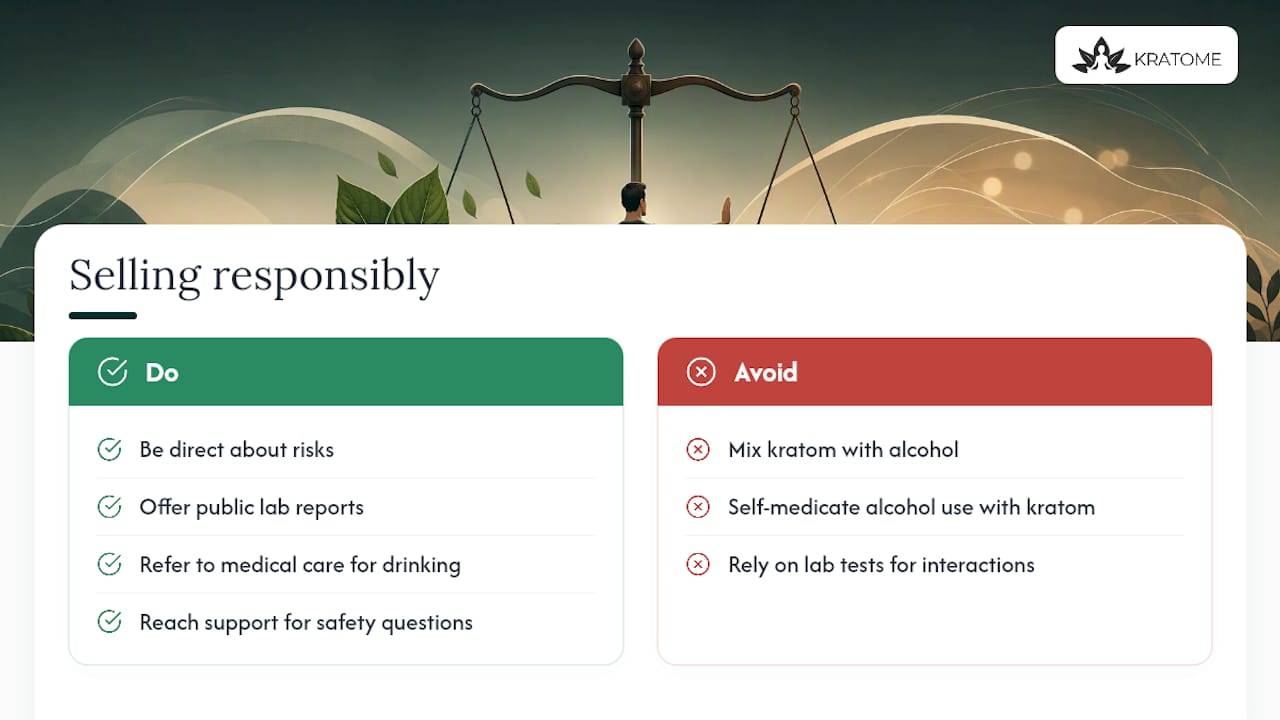
Some readers arrive at this topic because they’re hoping kratom might help them cut back on drinking. Preclinical research does show certain kratom alkaloids reducing alcohol intake in animal models, but that is a laboratory finding in rodents, not a green light for self-medication in humans. The gap between “an alkaloid did something interesting in a mouse study” and “this is safe for you to try at home” is exactly the gap where people get hurt. If you’re struggling with drinking, that’s a conversation for a doctor or an addiction service, not a substitution you make on your own.
If you suspect an overdose or are worried about dependence on either substance, get clinical help rather than trying to manage it alone. Our lab reports are public for anyone who wants to verify what they’re taking, and our support team is reachable for product or safety questions.
— Kratomvia
Choosing tested kratom without the guesswork of unverified products
If you’re going to use kratom, the products you choose matter almost as much as how you use them. Kratomvia tests every batch independently before it reaches you, so you know the alkaloid content and contaminant profile of what you’re actually taking, not what a label claims. That’s a meaningfully different starting point from buying an unverified powder online and hoping the potency matches the last bag.
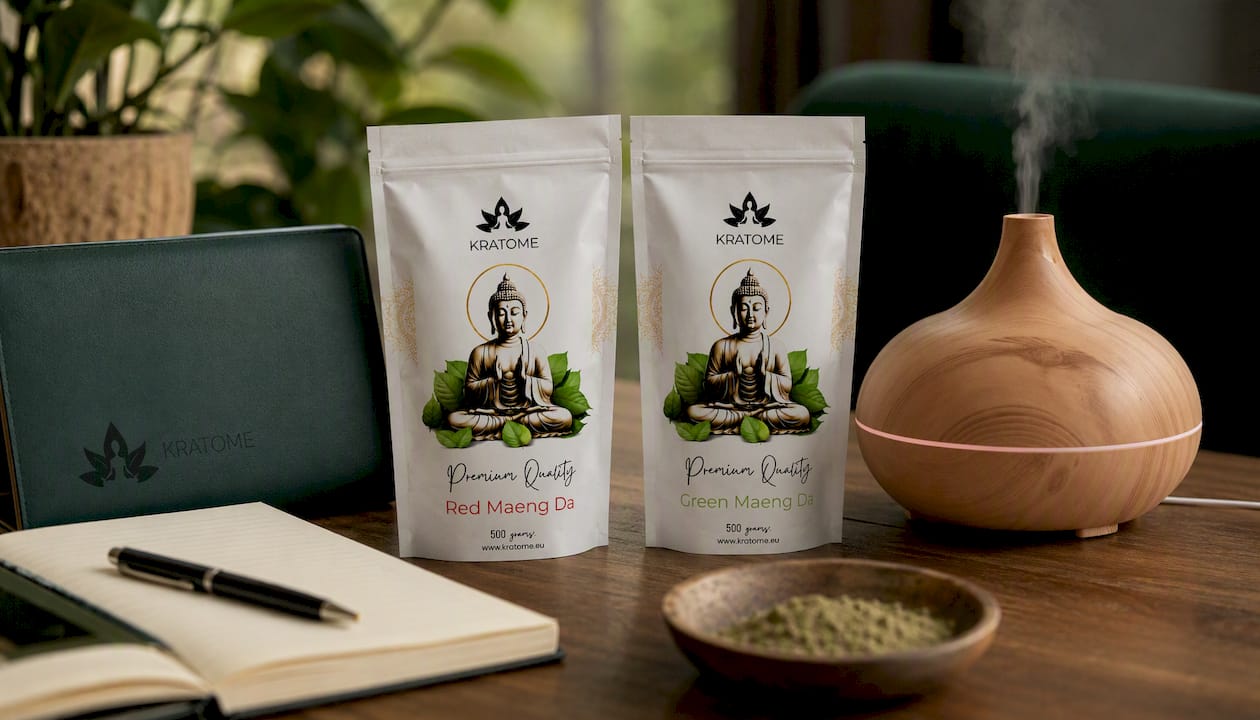
For pain relief and grounding effects, our Red Maeng Da is one of our most requested strains, with the batch testing to back its stated potency. If you’re after something more balanced for mood and mild energy, Green Maeng Da sits in that middle ground many users prefer for daytime use. And for those who want a more aromatic experience alongside their usual routine, our Aroma Disufer is worth a look.
None of that changes the core advice in this article: never combine any of these products with alcohol. Browse our range of lab-tested strains and check the batch reports before you buy, so you know exactly what’s in your order.
Sources
- Increases in Kratom-Related Reports to Poison Centers — National Poison Data System, United States, 2015–2025 | MMWR
- FDA laboratory analysis of kratom products — heavy metals
This article is general information, not a substitute for advice from a qualified doctor. Consult a qualified healthcare professional about your own circumstances before acting on anything here.
Recommended
- Kratom Alkaloids Explained: Mitragynine & 7-Hydroxymitragynine Effects
- Kratom Research Around the World | Kratom Benefits & Studies
- Kratom Strains Explained
- Kratom Information Guide | Kratom Strains & Products
Disclaimer: This article is for educational and informational purposes only. Kratom is sold by Kratomvia as a botanical specimen for study and collection purposes, and is not intended, approved, or authorised for human consumption in the European Union. Our kratom is sold as a soap accessory and collectible item.


