

Kratom Dosage for Beginners
5 September 2026

Most first-time users should start with a low dose of raw kratom powder, roughly the amount in one typical capsule, and wait at least a full day before considering more. That single caveat matters more than the number itself: potency swings wildly between products, so anyone pregnant, breastfeeding, taking opioids or sedatives, or living with liver or kidney disease should avoid kratom entirely or speak to a clinician first.
TL;DR:
- Beginners should start with 0.5 to 1 gram of raw kratom powder and wait at least a day before increasing the dose.
- Accurate measurement with a digital scale is essential, as teaspoon estimates can vary by several grams depending on powder density.
- Using capsules or tea may help control intake, but users should first establish effects with plain powder and avoid concentrated extracts initially.
- Kratom’s effects vary widely depending on the dose, product quality, and individual sensitivity, making test doses and tracking vital for safe use.
- Heavy or frequent use raises risks of liver injury, dependence, and adverse reactions, especially when combining kratom with other depressants or medications.
Table of Contents
- Kratom dosage guidelines: what low, moderate and high doses actually mean
- A starter protocol for testing your tolerance safely
- How to measure kratom dosage accurately across powders and capsules
- Toss-and-wash, tea or capsules: which suits a beginner best
- Kratom side effects, organ risks and warning signs to stop
- Medicines and health conditions that raise the risk
- Why product consistency changes how you should think about dosage
- Starting your first order: strains, packs and lab reports
- A note on starting slow
- Sources
Kratom dosage guidelines: what low, moderate and high doses actually mean
Dosage bands aren’t fixed rules. They’re rough guides based on how mitragynine, the primary active alkaloid, tends to behave at different quantities. Because kratom’s alkaloids act on opioid receptors, the effect profile shifts noticeably as the amount increases, moving from mild stimulation towards heavier sedation.
Here’s how the ranges typically break down for raw powder:
- Low dose: Often described as more energising or mood-lifting, similar to a stronger coffee without the jitteriness.
- Moderate dose: Where many people report pain relief or a calmer, more mixed effect, part stimulant, part relaxant.
- High dose: Increasingly sedating and opioid-like, with a higher chance of nausea, dizziness, or next-day grogginess.
These figures aren’t precise thresholds. Individual sensitivity, body weight, and the specific batch’s alkaloid content all shift where one person’s “moderate” becomes another’s “high.”
Pro Tip: Frequency matters as much as quantity. Surveys of regular users cited in research on kratom’s clinical pharmacology indicate that dosing often occurs multiple times per day, with heavier and more frequent use associated with increased risks.
One warning worth repeating: concentrated extracts, tinctures, and “enhanced” powders are not equivalent in alkaloid content to raw leaf powder. Because extracts can carry much higher alkaloid loads per gram, beginners are advised to avoid them until they understand their body’s response to plain leaf powder.
A starter protocol for testing your tolerance safely
Rushing the first few sessions is the most common beginner mistake. A slower, structured approach tells you far more about your own sensitivity than jumping straight to a “normal” dose.
- Day one, micro dose: Take 0.5 to 1 g and note how you feel over the next few hours. This tells you your baseline sensitivity before committing to anything larger.
- Wait and observe: Onset usually begins within 10 to 60 minutes, with effects peaking between one and three hours later.
- Day two or later, standard starter dose: If day one felt uneventful, move to 1 to 2 g, only after waiting at least a full day.
- Track everything: Log the dose, the form (powder, capsule, tea), the time taken, and what you noticed, even if it’s “nothing.”
- Increase in small steps: Adjust by no more than 0.5 to 1 g between sessions, and only once you’ve repeated a dose without new side effects.
- Cap your frequency: Limit yourself to two or three doses a day at most while you’re still learning your response, and build in regular breaks of several days to keep tolerance from creeping up.
A simple notebook or phone note works fine for tracking. Columns for date, dose, form, and effect are all you need.
How to measure kratom dosage accurately across powders and capsules
A kitchen teaspoon is not a dosing tool. Powder density varies enough between batches that eyeballing a “spoonful” can mean anywhere from 2 to 5 grams depending on how finely it’s ground and how tightly it’s packed.
- Use a digital milligram or gram scale. This is the only reliable way to hit a target dose consistently, and a basic jewellery scale costs little.
- Capsules vary by vendor. A single capsule may contain varying amounts depending on capsule size and fill density, so check the batch details rather than assuming a standard fill.
- Convert roughly, then verify. If you’re using capsules to reach a 2 g target, that could mean two to four capsules depending on the vendor. Confirm with the product listing rather than guessing.
- Avoid extracts as a beginner. Their concentrated nature makes gram-for-gram comparisons with raw powder meaningless, and dosing errors carry more weight in resin or extract form. The Kratomvia guide to kratom strains and products explains why potency differs so much between forms.
Toss-and-wash, tea or capsules: which suits a beginner best
Each preparation method changes the dosing experience, not just the ritual.
- Toss-and-wash is the fastest route: measure the powder, place it on your tongue, and wash it down with liquid. Onset tends to be quicker, but the taste is bitter enough that some beginners gag. Chasing it immediately with a strong-flavoured drink helps.
- Capsules offer convenience and a sense of consistency, though only if the vendor discloses batch lab reports confirming fill weight and potency. Filling your own capsules with measured powder gives you more control than buying pre-filled ones of unknown weight.
- Tea is generally gentler on the stomach. Steeping for 15 to 20 minutes in gently simmering water tends to extract a moderate amount of alkaloid content, though potency still varies depending on leaf quality and steep time, so start on the lower end of your intended dose.
Whichever method you choose, hold off on flavoured, “enhanced,” or extract-boosted products until you’ve established how plain powder affects you.
Kratom side effects, organ risks and warning signs to stop
Nausea, constipation, and drowsiness are the most commonly reported side effects, and they usually signal that the dose was simply too high for that session rather than something more serious. Cutting back on the next dose is often enough to resolve them.
Rarer but more serious risks have been documented in clinical literature. A review of the health risks associated with kratom preparations found evidence linking heavier or more frequent use to liver injury, seizures, and dependence, alongside withdrawal symptoms in regular users. Composition variability made it impossible for researchers to set a reliable health-based guidance value, which is exactly why a cautious, individualised approach matters more than a universal number.
Sensible harm-reduction habits reduce most of that risk:
- Never combine kratom with alcohol, benzodiazepines, or other sedatives.
- Keep a written record of every dose, so patterns in side effects become obvious early.
- Stop immediately if a new or severe symptom appears, rather than waiting to see if it passes.
- Take extended breaks between periods of use to limit tolerance build-up.
Seek urgent medical care for breathing difficulty, seizures, severe abdominal pain, or signs of liver trouble such as yellowing skin or eyes. The FDA has issued consumer alerts noting that kratom isn’t approved for medical use and has been linked to serious adverse events, including deaths, reinforcing why beginners should treat any severe symptom as a reason to stop and seek help.
Medicines and health conditions that raise the risk
Certain combinations turn a manageable dose into a dangerous one. Kratom’s alkaloids interact with the same receptor systems and liver enzymes used by several common medicines.
- Opioids and benzodiazepines: Combining these with kratom significantly raises the risk of dangerous sedation and slowed breathing.
- Alcohol: Mixing depresses the central nervous system further than either substance alone.
- Medicines processed by CYP2D6 or CYP3A4 liver enzymes: Many antidepressants, antihistamines, and heart medications rely on these pathways, and kratom can interfere with how they’re metabolised.
- Pregnancy, breastfeeding, and children: Avoid entirely, given the lack of safety data and documented dependence risk.
- Liver or kidney disease: Speak to a clinician first, since organ toxicity has been reported in existing case reviews.
If you do consult a doctor, bring the specific product, the strain, your typical dose in grams, and how often you use it. That detail matters more than a general description of “kratom.”
Why product consistency changes how you should think about dosage
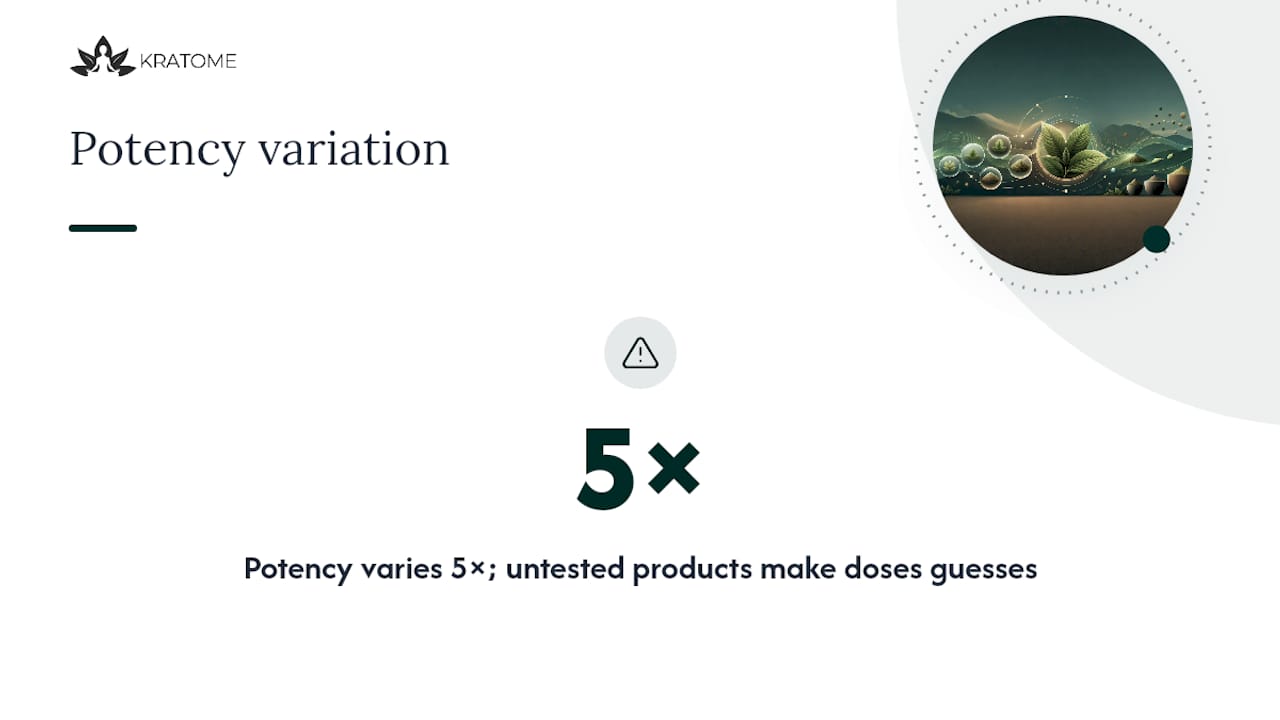
Every dosage figure in this guide assumes a reasonably consistent product, and that assumption doesn’t hold across the wider market. An analysis of unregulated online kratom vendors found mitragynine content varying widely between products, with some teas differing in potency by a factor of five. If you don’t know your product’s actual alkaloid content, you’re guessing at a dose no matter how carefully you weigh it.
This is where sourcing and testing stop being marketing language and start mattering practically. Independent batch lab testing can help verify product quality, focusing on mature leaves and controlled drying to improve consistency. Before starting with any product, check its kratom lab reports for potency figures and confirmation that it’s free of contaminants. A batch report that confirms mitragynine content gives you a genuinely informed starting point, rather than a guess dressed up as a dose.
Starting your first order: strains, packs and lab reports
Choosing a first strain matters less than starting small and checking the batch report before you measure a single gram. Independent testing for potency and contaminants can ensure that label information reflects the actual contents rather than an industry average.
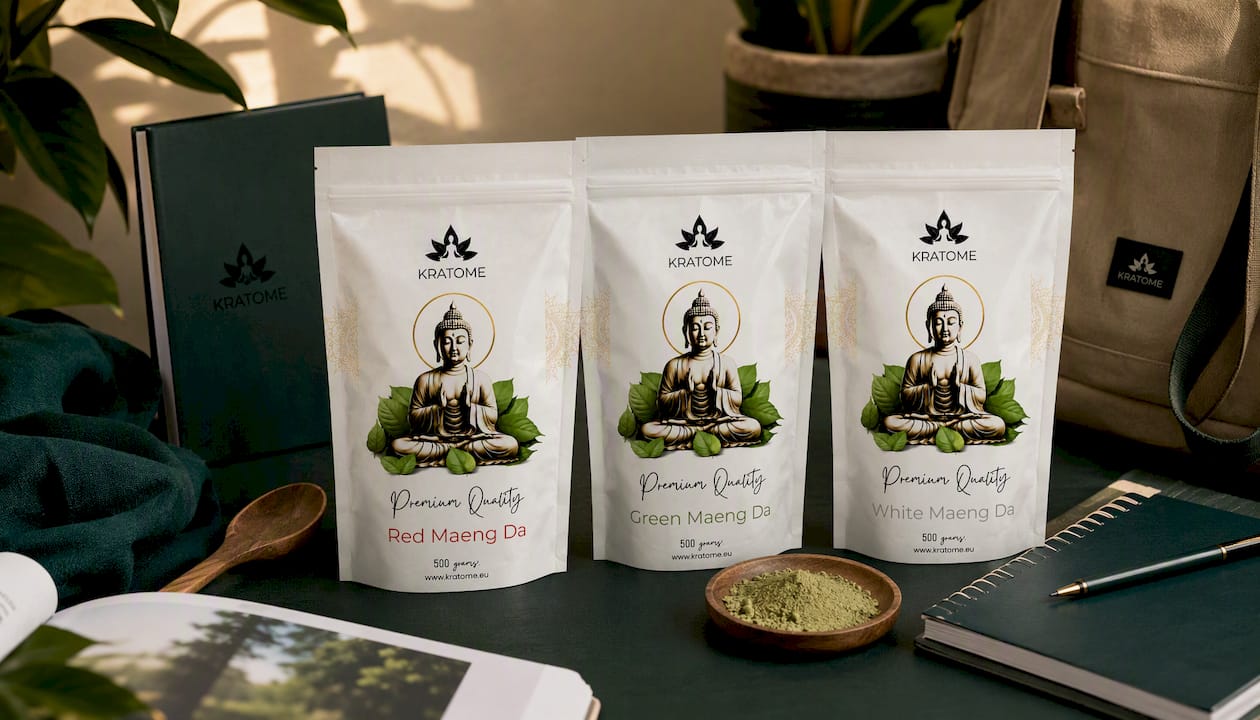
For a first purchase, three strains cover the range beginners usually ask about. Red Maeng Da tends to sit at the calmer, more sedating end and suits evening use. Green Maeng Da offers a more balanced middle ground between energy and relaxation. White Maeng Da leans stimulant, closer to a cleaner alternative to caffeine, so beginners should start at the very low end of the dosing range with this one in particular. Small starter packs of each let you compare effects without committing to a full-size bag before you know what suits you. Check the lab report for your chosen batch, weigh your first dose on a proper scale, and order from the strain that matches the effect you’re actually looking for.
A note on starting slow
This guide was created to help beginners avoid overdosing or poor experiences with inconsistent products. Start low, track your intake, and consult a clinician if you take medications or have health conditions. When unsure about a batch’s potency, check available lab reports and seek support before dosing.
— Kratomvia
This article is general information, not a substitute for advice from a qualified doctor. Consult a qualified healthcare professional about your own circumstances before acting on anything here.
Sources
- An update on the clinical pharmacology of kratom: uses, abuse potential, and future considerations
- Evaluation of the unregulated online kratom market in two east-central European countries
- Kratom (EU Early Warning / drug profile)
- FDA: alerts consumers not to use kratom
Recommended
- Kratom Lab Reports Europe | Lab-Tested Kratom
- Buy Kratom Online Europe & UK – Premium Lab-Tested Kratom
- Buy Premium Kratom in EU & UK | Kratom Strains Explained
- Kratom Information Guide | Kratom Strains & Products
Disclaimer: This article is for educational and informational purposes only. Kratom is sold by Kratomvia as a botanical specimen for study and collection purposes, and is not intended, approved, or authorised for human consumption in the European Union. Our kratom is sold as a soap accessory and collectible item.


