

Kratom Shelf Life
17 September 2026

When stored sealed and dry, kratom powder for topical and craft use typically stays fresh for roughly 12 to 24 months. Once opened, expect a shorter, practical window of about 6 to 12 months for craft and soap-making projects. The single most important rule for either window: control moisture and air, and lean on the batch’s lab report whenever one is available.
TL;DR:
- Kratom powder remains stable for 12 to 24 months when sealed and stored properly, but once opened, its shelf life drops to 6 to 12 months from regular handling.
- Moisture and air exposure significantly accelerate degradation, with visual, odor, and clumping changes warning of declining quality.
- Using airtight, moisture-resistant packaging combined with desiccants and strict inventory rotation optimizes long-term stability.
- The shelf life of a blended batch is limited by its shortest-lived ingredient, requiring careful date setting and labeling for end products.
- Laboratory testing and traceability of individual batches ensure quality and predictability of kratom’s stability during storage.
Table of Contents
- How Long Does Kratom Powder Last for Craft Use?
- Why Moisture Turns a Good Batch Bad
- Storing Kratom Powder Correctly in a Workshop or Warehouse
- Choosing Packaging and Writing Labels That Protect Quality
- When Blending Ingredients Shortens Your Batch Life
- What Kratomvia’s Batch Testing Tells You About Shelf Life
- Does the Strain Change How Long Kratom Powder Lasts?
- Does Grind Size Affect How Well Kratom Powder Holds Up?
- What Actually Matters When You’re Running a Small Batch Operation
- Lab-Tested Kratom Strains Built for Formulators
- Sources
- FAQ
How Long Does Kratom Powder Last for Craft Use?
Sealed, unopened kratom powder used in soap-making and cosmetic formulation holds up for roughly 12 to 24 months under proper storage. That range depends heavily on how the supplier handled the batch before it ever reached your workshop. A powder that sat in a humid shipping container for weeks will not perform like one moved through climate-controlled logistics.
Once you break the seal, the clock speeds up. Opened powder used regularly in a workshop generally holds acceptable quality for 6 to 12 months, and several variables shorten that further: humid air, repeated container opening, direct sunlight, and warm storage rooms all chip away at stability faster than time alone.
Powder degrades faster than cut or whole botanical material because grinding exposes far more surface area to air and moisture. A few practical points worth keeping on a workshop wall:
- Sealed, unopened stock: roughly 12 to 24 months under good conditions.
- Opened, in-use stock: roughly 6 to 12 months with regular handling.
- Fine powders age faster than cut or whole-leaf material of the same botanical.
- A finished soap or cosmetic batch is only as stable as its shortest-lived ingredient, not the average of everything mixed in.
That last point matters more than most crafters realize, and it comes back later when we talk about blending recipes.
Why Moisture Turns a Good Batch Bad
Water activity, often written as aw, measures how much unbound water sits available for chemical reactions and microbial growth inside a powder, separate from the moisture percentage on a spec sheet. A powder can look bone dry and still carry high water activity, and that hidden moisture is what quietly drives chemical and microbial change long before anything looks wrong on the surface.
That is why a bag can pass a casual glance and still be on its way out. Trust your senses and a short checklist instead of guesswork.
Reject or discard material showing any of these signs:
- Musty or sour odor instead of the typical earthy, herbal scent.
- Persistent clumping that doesn’t break apart with a light shake or stir.
- Color drift, especially darkening or blotchy patches across the powder.
- Visible mold, any fuzzing, or spotting, even in a small patch.
Any one of those signals degraded material that should not go into a finished product, full stop.
Build a two-minute habit around every incoming shipment: open the bag, smell it, run a pinch between your fingers for grit or clumping, and check the color against a reference sample from a previous order. Do the same spot-check monthly on anything already open in your workshop.
Pro Tip: Keep a small sealed reference jar from every new batch. Comparing color and scent against that reference months later catches slow degradation faster than relying on memory alone.
Storing Kratom Powder Correctly in a Workshop or Warehouse
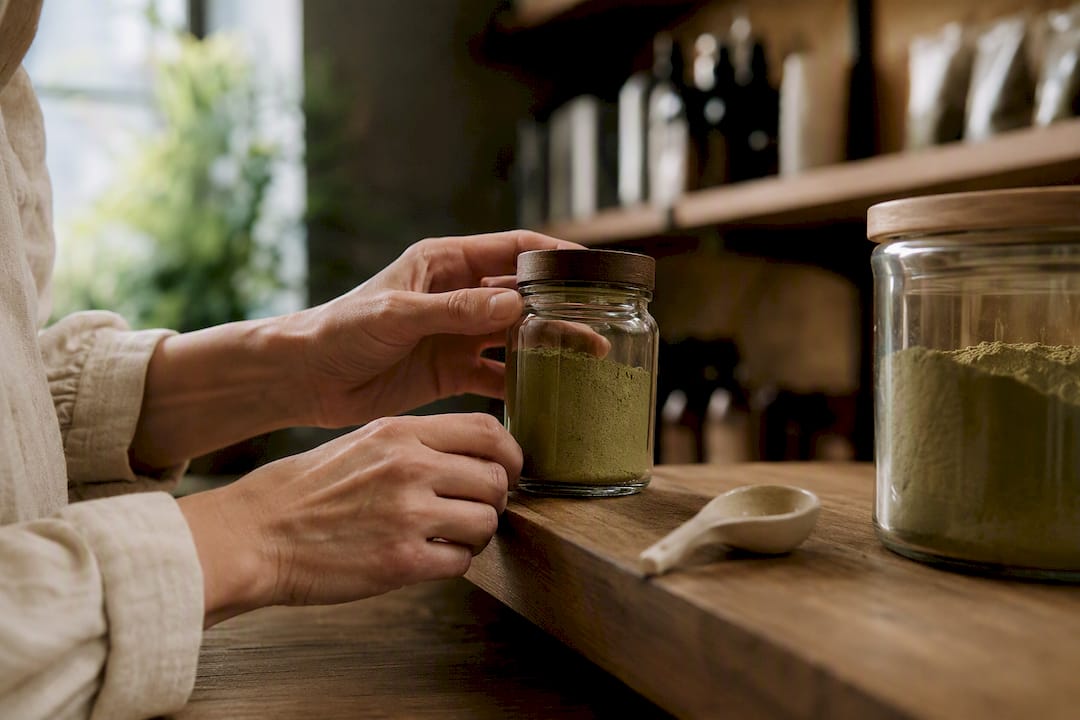
Stability starts with a stable room. Aim for cool, dry storage, ideally below 25°C, away from direct sunlight and away from any wall that shares space with plumbing or exterior humidity. Swings in temperature cause condensation inside containers even when the room itself seems fine.
Container choice does most of the heavy lifting after that:
- Opaque, high-barrier pouches block light and slow oxygen exchange.
- Food-grade HDPE containers or fiber drums work well for bulk storage.
- Desiccant packets inside sealed containers pull ambient moisture before it reaches the powder.
- Nitrogen-flushed or vacuum-sealed packaging suits larger inventory runs.
Formulators who prioritize air-tight, moisture-resistant packaging consistently report the best long-term stability, because that packaging is the most direct control point over water activity available to a small operation.
Decant working stock into smaller containers instead of opening a full sack every session, minimize headspace when resealing, and rotate inventory on a strict first-in, first-out basis. On receiving, inspect boxes for condensation or crushed packaging before storage. Long shipping times and rough handling anywhere in the chain commonly shorten usable life, so a five-minute receiving check saves months of shelf life.
Choosing Packaging and Writing Labels That Protect Quality
Packaging is a shelf-life decision, not an afterthought. For opened, frequently accessed stock, small-batch makers who decant into smaller sealed containers and add desiccants to reduce moisture exposure typically preserve quality better than crafters who repeatedly dip into one large bag in a humid room.
Retail-size orders benefit from resealable barrier pouches with a one-way valve or a simple zip-lock barrier bag, paired with a small desiccant sachet. Wholesale and bulk orders justify heavier investment: fiber drums with liner bags, nitrogen flushing before sealing, and palletized storage off the warehouse floor.
Label every container with information a future version of you will need:
- Manufacture or repack date, written clearly, not coded.
- Lot or batch code matching the supplier’s paperwork.
- A conservative “best used by” date for topical or craft applications, not an optimistic one.
- Storage instructions: cool, dry, sealed, away from direct light.
Conservative labeling costs nothing and prevents the far more expensive mistake of using degraded material in a batch you plan to sell.
When Blending Ingredients Shortens Your Batch Life
A soap or cosmetic recipe is only as stable as its shortest-lived component, not the average of what’s mixed in. Combine a botanical powder rated for 18 months with an essential oil or plant extract that only holds for 6, and the finished batch inherits that 6-month ceiling, not the powder’s longer window.
Set batch dates with a simple workflow:
- Record the manufacture and expiry date of every individual ingredient before blending.
- Identify the shortest-lived component in the recipe.
- Set the finished batch’s use-by date to match that shortest window, not the average.
- Print that date on the finished product’s label alongside the batch code.
A lavender-and-botanical-powder soap where the essential oil expires in 8 months should never carry a 2-year shelf claim just because the powder itself would last that long.
What Kratomvia’s Batch Testing Tells You About Shelf Life
Kratomvia sources kratom from established growers in Southeast Asia and puts every batch through independent laboratory testing before it reaches a customer. That testing matters for shelf-life confidence, not just purity claims, because a batch that starts clean and dry ages more predictably than one carrying hidden contamination or moisture from the start.
A well-built Certificate of Analysis (COA) covers three things formulators should check first: microbial results, heavy metal screening, and identity or purity confirmation for the botanical itself. This six-step COA reading guide breaks down how to interpret those sections without a lab background.
Traceability closes the loop. A batch code system tied to a specific COA lets you match what’s on your shelf to the exact test results for that lot, which is the same discipline that separates a stable supply chain from a guessing game.
Does the Strain Change How Long Kratom Powder Lasts?
Red Maeng Da, Green Maeng Da, and White Maeng Da all follow the same general storage rules, because shelf life is driven far more by moisture control, packaging, and handling than by which strain sits inside the bag. That said, crafters working across all three do notice small practical differences worth planning around.
Color stability tends to show fastest and most visibly on lighter powders. White Maeng Da’s paler tone makes any yellowing or darkening easier to spot early, which is actually an advantage for quality checks. Darker powders, like some Red Maeng Da batches, mask early color drift longer, so odor and clumping become the more reliable early-warning signs for that strain.
Moisture sensitivity itself does not vary meaningfully by strain designation. Maeng Da variants share the same base botanical structure, and what differs between batches is almost always handling, packaging, and storage conditions rather than an inherent strain trait. A Green Maeng Da batch stored in a sealed, desiccant-protected drum will outlast a Red Maeng Da batch left in a torn bag near a window, regardless of what the strain label says.
The practical takeaway for a workshop running multiple strains: apply identical storage discipline across all of them, but use each strain’s visual profile to your advantage during inspection. Lighter powders reward frequent visual checks; darker powders reward a stronger reliance on scent and texture testing.
Does Grind Size Affect How Well Kratom Powder Holds Up?
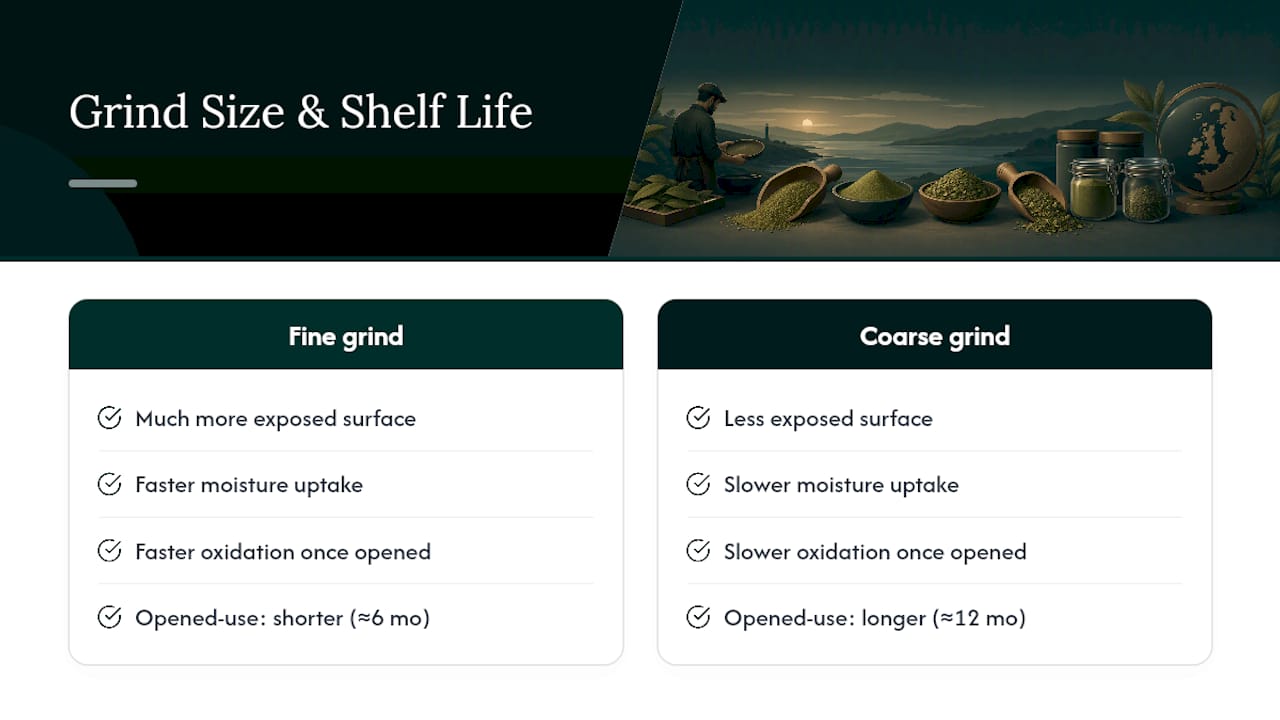
Finer grinds break down faster than coarser ones, and the reason comes back to surface area. Every time a botanical is ground finer, more of its internal structure gets exposed to ambient air, light, and moisture, which is exactly the combination that accelerates degradation in powdered herbs generally.
A fine, talc-like kratom powder has dramatically more exposed surface per gram than a coarser, slightly granular grind. That extra exposure means faster moisture uptake in humid conditions and faster oxidation once a container is opened. Powders in general already show shorter shelf windows than cut or whole-leaf material, and grind size is one of the main reasons why: the finer the particle, the faster it interacts with its environment.
For soap-makers and cosmetic formulators, this has a direct practical consequence. If you’re buying a very fine grind for a smooth topical application, plan on the shorter end of the 6 to 12 month opened-use window rather than the longer end. Coarser grinds used for exfoliating bars or textured applications tend to hold their quality a bit longer once opened, simply because less surface sits exposed at any given moment.
The fix isn’t switching to a coarser grind you don’t actually want for your recipe. It’s tightening storage discipline around fine powders specifically: smaller decanted containers, minimal headspace, desiccants, and shorter intervals between reordering. Treat a fine-ground batch as a faster-moving inventory item, not a shelf-stable one you can order once a year.
What Actually Matters When You’re Running a Small Batch Operation
Three rules cover most of the decisions a soap-maker or formulator faces day to day. First, buy only what you’ll use within a realistic window, since bulk discounts mean nothing if half the bag degrades before you reach it. Second, store everything sealed, cool, and dry from the moment it arrives, not just when you remember to. Third, date every batch by its shortest-lived ingredient, never by the sturdiest one.
Reject a shipment on sight if the packaging arrives damaged, damp, or crushed. When setting use-by dates for customer-facing products, round down. A conservative label protects your reputation far more than an optimistic one protects your margins.
— Kratomvia
Lab-Tested Kratom Strains Built for Formulators
Some suppliers provide lab reports for batches before shipping, rather than only a purity claim on a product page. That means you’re not guessing whether the Red Maeng Da, Green Maeng Da, or White Maeng Da sitting in your workshop started clean.
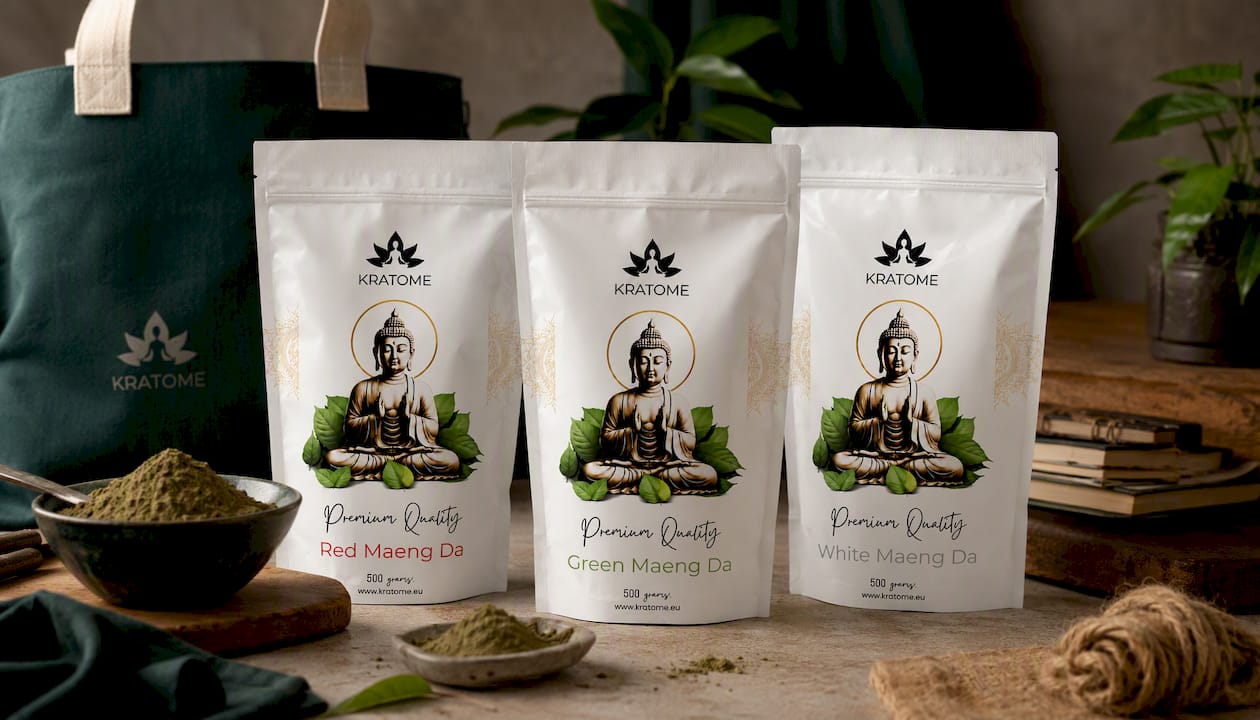
Each strain ships with discreet packaging, and batches often carry traceable codes tied to independent lab reports, allowing matching of products to specific test results. Browse Red Maeng Da, Green Maeng Da, or White Maeng Da for current stock and packaging sizes, and check the lab reports page before placing a bulk or wholesale order. If you’re stocking a workshop or reordering for a retail line, request wholesale details directly through the product page to get batch sizing and traceability documentation matched to your order.
Sources
For deeper technical grounding, three resources are worth bookmarking: the COA reading guide for interpreting microbial and purity sections, the water activity white paper for the science behind moisture-driven degradation, and the organic powder storage guide for packaging best practices.
- Do spices expire? — Healthline
- Deconstructing changes in the stability of powders and spices with water activity — Neutec Group
- Shelf Life, Storage & Packaging Practices for Organic Powders — AgronicFood
- Herbal product shelf life — ArdentSeller
FAQ
How long does kratom powder last once opened?
Opened kratom powder used for topical or craft applications typically stays usable for 6 to 12 months under proper sealed, dry storage.
Does kratom powder expire the same way spices do?
Yes. Like other botanical powders, it doesn’t have a sharp expiration point but degrades gradually, and the same warning signs apply: musty odor, clumping, color change, and visible mold.
What’s the best container for storing kratom powder?
Opaque, high-barrier pouches or food-grade HDPE containers with a tight seal work best, especially paired with a desiccant packet to control internal moisture.
Does strain type change how long kratom powder lasts?
Not meaningfully. Red Maeng Da, Green Maeng Da, and White Maeng Da all follow the same storage rules, since handling and packaging matter far more than the strain itself.
Why does finer kratom powder degrade faster than coarse powder?
Finer grinds expose more surface area to air and moisture, which speeds up oxidation and moisture uptake compared to coarser or whole-leaf material.
How does Kratomvia support shelf-life confidence?
Every Kratomvia batch, including Red Maeng Da, Green Maeng Da, and White Maeng Da, ships with an independent lab report so buyers can verify purity and quality before storage even begins.
Recommended
- Glycerin Soap Base for Kratom Soap Making
- Tea Tree Essential Oil for Kratom Soap Making EU & UK
- Shea Butter Soap Base for Kratom Soap Making
- Peppermint Essential Oil for Kratom Soap Making EU & UK
Disclaimer: This blog is intended for educational and informational purposes only. The content provided is not intended to promote, recommend, or suggest human consumption of kratom or any other product. Our products are sold exclusively for their intended purposes as described on our website. This information should not be interpreted as medical advice, and we encourage readers to consult qualified professionals for any health-related questions.


