

Kratom Side Effects: What You Should Know
31 August 2026

Kratom can cause common short-term side effects like nausea and dizziness, and at high doses, mixed with other substances, or when contaminated, it has been linked to liver injury, seizures, and rare fatalities. Risk climbs with dose, frequency, and combining kratom with other drugs, and regular use carries genuine dependence and withdrawal potential. If you experience severe symptoms, seek urgent medical care, and always check your local legal status before buying.
TL;DR:
- Dosing above 8 grams significantly raises the risk of toxicity, especially if combined with other substances or if the batch has high alkaloid levels.
- Red strains tend to cause more sedation and constipation, while white strains are more stimulating and linked to agitation, which guides effect expectations but not overall safety.
- Regular use often leads to dependence and withdrawal symptoms resembling mild opioid withdrawal, peaking within days and easing over one or two weeks.
- Contamination risks include heavy metals, microbes, and adulterants, which independent lab testing can identify but do not eliminate pharmacological dangers.
- Combining kratom with alcohol, sedatives, or prescription drugs greatly increases the likelihood of severe adverse events and should be avoided, especially in vulnerable groups.
Table of Contents
- Kratom side effects: the common, short-term list
- Serious and rare harms reported in clinical literature
- How kratom works and why dependence develops
- Dose, product variability, and contamination risks
- Who should avoid kratom, and what interacts badly with it
- Kratom’s legal status varies by country, and that shapes your safety
- What to do if you experience worrying symptoms
- How Kratomvia’s lab testing helps you evaluate quality
- Do side effects differ between kratom strains?
- Our take: testing reduces risk, it doesn’t remove it
- Choosing a lab-tested strain, and buying it safely
- Sources
Kratom side effects: the common, short-term list
Most people who try kratom will notice something within the first hour, and for the majority it is mild and passes on its own. The gastrointestinal system tends to react first. Nausea, vomiting, and constipation are the most frequently reported complaints in survey and poison-control data, and constipation in particular shows up disproportionately among people who use kratom regularly rather than occasionally.
Reduced appetite and gradual weight loss follow a similar pattern. They are rarely dangerous on their own, but they are a useful early signal that your body is adjusting to a psychoactive substance, not a herbal tea.
Beyond the gut, several other effects turn up often enough to count as typical rather than exceptional:
- Dizziness and drowsiness, especially at higher doses where kratom’s sedative, opioid-like qualities take over
- Agitation and tremors, more common at lower to moderate doses where the stimulant effect dominates
- Headache, often linked to dehydration or dose escalation
- Tachycardia and palpitations, a racing or irregular-feeling heartbeat that some users notice within 20 to 40 minutes of taking a dose
- Sweating and dry mouth, mild but persistent complaints across most user surveys
Dose and frequency shape almost everything on this list. A single small dose tends to produce the stimulant-leaning effects, alertness, mild agitation, faster heart rate, while a larger dose pushes towards sedation, dizziness, and gastrointestinal upset. Frequency matters just as much as quantity. Someone taking kratom two or three times a day, every day, is far more likely to develop constipation, tolerance, and the early signs of dependence than someone using it occasionally.
None of this means kratom is uniquely dangerous compared to other psychoactive plant products. It means the same logic that applies to caffeine or nicotine applies here: the body adapts to regular exposure, and that adaptation has costs. The clinical pharmacology literature on kratom is consistent on this point. Most adverse effects are dose-related, predictable, and reversible once use stops or drops. The exceptions, covered next, are rarer but far more serious.
Serious and rare harms reported in clinical literature
Case reports and toxicology reviews describe a smaller but clinically significant set of severe outcomes. These are uncommon relative to the volume of people using kratom worldwide, but they are well documented enough that you should know the warning signs.
Liver injury (hepatotoxicity) typically presents as jaundice, dark urine, fatigue, and abdominal pain, usually appearing after weeks of regular, often heavy, use rather than after a single dose. Case series describe a cholestatic pattern, meaning bile flow is disrupted, and most reported cases resolve once kratom use stops, though recovery can take weeks.
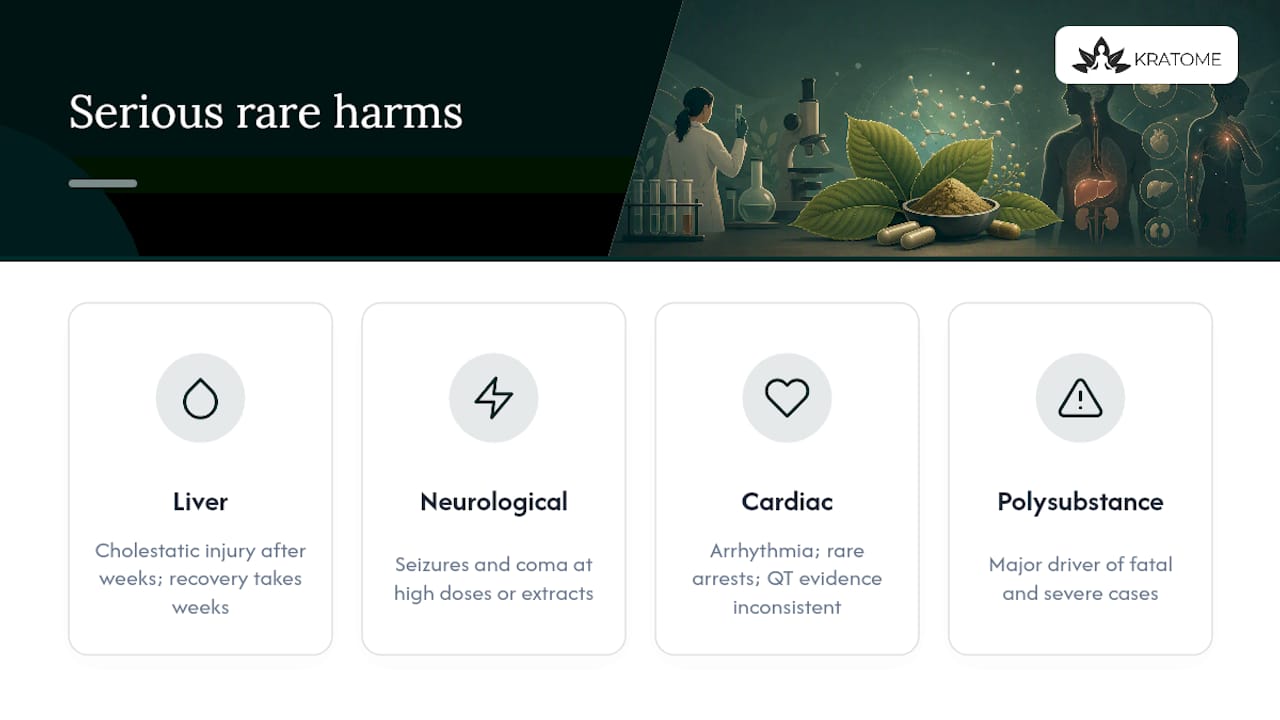
Neurological events at the severe end include seizures, altered mental status, and in some case reports, coma. These cluster overwhelmingly around high doses, extracts with concentrated alkaloid content, or use alongside other central nervous system depressants.
Cardiac issues such as arrhythmia and, in rare cases, cardiac arrest have appeared in toxicology case series, though the evidence on QT-interval prolongation (a marker doctors use to flag arrhythmia risk) remains inconsistent across studies. Kidney injury and respiratory depression round out the serious end of the spectrum, and respiratory failure in particular is almost always reported alongside other sedating substances.
One consistent pattern across the case-report literature: polysubstance use is a major driver of the most severe outcomes, including the fatalities that make headlines. Kratom alone rarely produces a fatal outcome; kratom combined with opioids, benzodiazepines, or alcohol is a different picture entirely.
The FDA has repeatedly warned that serious adverse events, including liver toxicity, seizures, and substance-use disorder, are associated with kratom use, and the agency continues to monitor adverse-event reports as they come in. That surveillance framing matters. It is not evidence that kratom is uniformly dangerous, but it is a clear signal that the serious end of the risk spectrum is real, not theoretical.
How kratom works and why dependence develops
Kratom’s effects trace back to two main alkaloids: mitragynine and 7-hydroxymitragynine. Both act on mu-opioid receptors, the same receptor family targeted by prescription opioids, though the binding profile and downstream effects differ in ways researchers are still mapping. Kratom also interacts with other receptor systems, which helps explain why its effects feel more complex than a typical opioid or stimulant alone.
Dose changes the character of the experience substantially:
- Low doses tend to produce stimulant-like effects: alertness, sociability, mild energy
- Higher doses shift towards sedation and analgesia, closer to a classic opioid effect
- The overlap zone between these two profiles varies by person, tolerance, and even the specific batch, which is part of why dosing kratom consistently is harder than it sounds
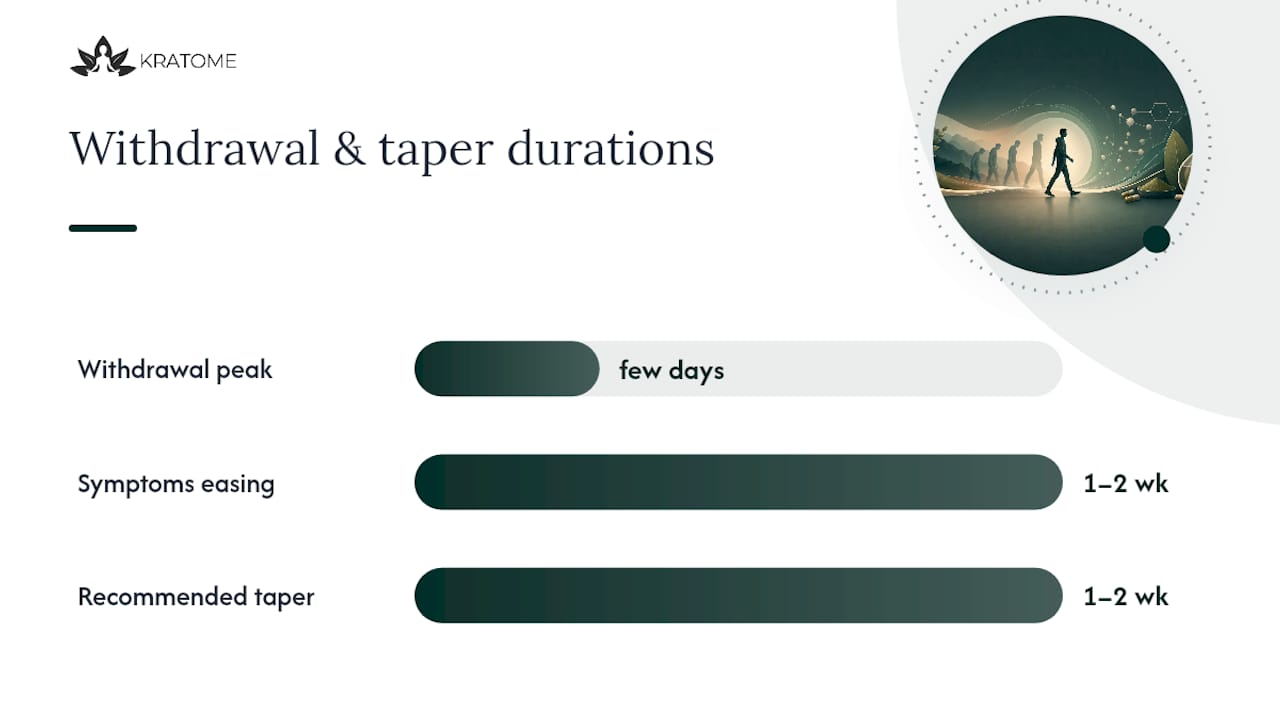
Regular, frequent use can lead to genuine physical dependence. Withdrawal symptoms mirror mild opioid withdrawal: muscle aches, irritability, insomnia, low mood, and cravings, typically peaking within a few days of stopping and easing over one to two weeks. In pregnancy, in-utero exposure has been linked to neonatal abstinence syndrome, meaning newborns can show withdrawal symptoms shortly after birth.
Pro Tip: If you use kratom daily and want to stop or cut back, taper gradually rather than quitting outright. A slow reduction over one to two weeks tends to produce milder withdrawal than stopping cold, and it gives you time to notice any symptoms worth discussing with a doctor.
The evidence base here still has gaps. Much of what we know comes from case reports, smaller observational studies, and self-reported survey data rather than large randomised trials, so treat specific numbers with appropriate caution.
Dose, product variability, and contamination risks
Toxicity reports become noticeably more frequent above roughly 8 grams per dose, but treat that as a warning marker, not a safety threshold. Individual tolerance, body weight, and the alkaloid concentration of a specific batch all shift where problems start, and some people report adverse effects well below that figure.
That last point, batch variability, deserves more attention than it usually gets; understanding differences between hemp flower and other botanical products can shed light on regulation and quality issues surrounding kratom and similar herbal substances. See more on hemp flower vs CBD flower vs THCA flower. Mitragynine and 7-hydroxymitragynine content can swing significantly between harvests depending on plant growth cycle, leaf maturity, and drying method. Two bags labelled with the same strain name can carry meaningfully different potency, which makes “I always take three grams” far less reliable as a safety rule than it sounds.
Contamination adds a separate layer of risk entirely:
- Heavy metals, particularly lead and nickel, have turned up in market samples of kratom powder
- Microbial contamination, including Salmonella, has been documented in tested batches
- Adulteration with added opioids or synthetic stimulants has been reported in some products sold as pure kratom, which is a major contributor to the most severe poisoning cases
Independent laboratory testing and transparent batch reporting reduce these risks considerably, since a certificate of analysis can flag heavy metals, microbial load, and alkaloid content before a product ever reaches you. It does not remove the underlying pharmacological risk of the alkaloids themselves. A perfectly clean batch of kratom is still an opioid-receptor-active substance, and treating lab testing as a total safety guarantee misunderstands what it actually verifies.
Who should avoid kratom, and what interacts badly with it
Kratom’s alkaloids are processed through the liver enzymes CYP2D6 and CYP3A4, the same metabolic pathways used by a long list of common medications. That overlap creates real interaction risk with antidepressants, benzodiazepines, and prescription opioids, sometimes intensifying sedation, sometimes altering how quickly your body clears either substance.
Certain groups face substantially higher stakes:
- Pregnant women, given the documented risk of neonatal abstinence syndrome in newborns exposed in-utero
- People with liver disease, since kratom’s hepatotoxicity risk compounds existing liver strain
- People with a seizure disorder, because kratom has been linked to seizures even in some individuals without a prior history
- People with cardiac disease, due to the tachycardia and arrhythmia risk noted in case reports
- People with kidney disease, given documented cases of kidney injury
- Anyone with a history of substance-use disorder, because of kratom’s own dependence potential and opioid-receptor activity
Combining kratom with alcohol or sedating prescription drugs shows up repeatedly in the most severe case reports, and that combination is one of the clearest, most avoidable risk factors in the entire literature. If you take any regular medication, tell your doctor you use kratom, how much, how often, and for how long, the same way you would disclose alcohol use or an over-the-counter supplement.
Kratom’s legal status varies by country, and that shapes your safety
There is no single global rule on kratom. Some countries restrict or ban it outright, others allow open retail sale, and the picture across Europe alone is genuinely fragmented. European legal status differs enough from one country to the next that a product legal to buy in one EU member state may be controlled in a neighbouring one, so check the current legality rules for your own country before ordering.
Regulatory bodies have generally chosen surveillance over outright prohibition. EUDA monitoring tracks national differences without imposing a single EU-wide rule, and the World Health Organization has similarly opted to keep kratom under review rather than push for an international ban, citing insufficient evidence to justify one while acknowledging the harms that do exist.
That regulatory gap has a direct safety consequence: where kratom sits in a legal grey zone, manufacturing standards are inconsistent, and adulteration is harder to police. Buying from a market with clear testing requirements, or from a vendor who publishes its own lab results, closes part of that gap yourself.
What to do if you experience worrying symptoms
Certain symptoms are not “wait and see” situations. Seek emergency care immediately for seizures, severe breathing difficulty, chest pain, sudden severe confusion, or jaundice (yellowing of the skin or eyes).
When you contact a clinician or poison centre, have this ready if you can:
- The exact product name and strain
- The dose taken and time of ingestion
- Any other substances involved, including alcohol or medication
- A lab report or batch number, if you have one
Naloxone, the standard opioid-overdose reversal drug, is not reliably proven to reverse kratom toxicity in every case, given kratom’s more complex receptor activity. Clinicians will use their own judgement rather than treating it as a guaranteed fix.
Pro Tip: Keep the original packaging or a photo of the batch number until you’re confident you’ve had no adverse reaction. If something does go wrong days later, that detail can save a clinician significant time.
Once you’re through the acute episode, book a follow-up with your GP and mention the incident even if symptoms resolved, particularly if you plan to continue using kratom.
How Kratomvia’s lab testing helps you evaluate quality
Every batch Kratomvia sells goes through independent laboratory testing before it reaches a customer, checking alkaloid profiles, heavy metals, and microbial contamination against the risks described above. That testing regime exists precisely because those contamination patterns are documented, not hypothetical.
When you read a certificate of analysis (COA), whether from Kratomvia or elsewhere, look for:
- The testing laboratory’s name and accreditation, so you know who actually ran the analysis
- The test date, ideally matched to your specific batch number
- Measured contaminant levels for heavy metals and microbial content, not just a pass or fail
- Alkaloid figures for mitragynine and 7-hydroxymitragynine content
Sourcing practices matter alongside testing. Kratomvia focuses on mature leaves and controlled drying methods, both of which affect final alkaloid consistency and reduce the batch-to-batch swings discussed earlier. This lowers contamination and potency-variability risk considerably. It does not change the fact that kratom remains pharmacologically active. A lab-tested product can still cause dependence with regular use, and it can still interact with your medication. Testing addresses product quality, not the underlying biology of the alkaloids themselves.
Do side effects differ between kratom strains?
Colour-based strain names (red, green, white) describe the leaf’s vein colour at harvest and, to some extent, drying method, both of which influence the ratio of mitragynine to other alkaloids present. That shifts the feel of a dose more than it changes the underlying risk category.
Red-vein varieties, including Red Maeng Da, tend to sit further towards the sedative, opioid-leaning end of the spectrum, which is part of why users associate them with relaxation and pain relief. That same sedative lean means the drowsiness, dizziness, and constipation covered earlier tend to show up more with red strains, particularly at higher doses.
White-vein varieties skew towards the stimulant end, more alertness, more energy, and correspondingly, users report agitation, tremor, and a faster heart rate more often with white strains than with red ones. Green-vein varieties generally sit in between, which is why many users describe them as more balanced.
None of this changes the serious-harm profile. Hepatotoxicity, seizures, and cardiac events have been reported across strains, and the alkaloid variability discussed in the dosing section applies to red, white, and green kratom alike. Strain colour is a reasonable guide to expected everyday effects; it is not a reliable guide to overall safety.
Our take: testing reduces risk, it doesn’t remove it
Kratomvia exists because contamination and inconsistency are real, documented problems in the kratom market, and independent testing genuinely addresses them. We won’t pretend otherwise, and we also won’t pretend that a clean COA turns kratom into a risk-free product.
The honest position is this: lab testing is harm reduction, not a safety guarantee. It tells you what’s not in your product, heavy metals, microbes, hidden adulterants, but it can’t change what kratom’s own alkaloids do in your body. If you’re using kratom regularly, dependence and withdrawal remain genuine possibilities regardless of how clean the batch is.
Our approach is transparency first: publish the lab reports, explain what they mean, and let you make an informed choice rather than a reassured one. If you have questions about a specific batch or a health concern, our customer support team can point you to the relevant certificate of analysis.
— Kratomvia
Choosing a lab-tested strain, and buying it safely
Once you understand the risk profile, choosing a strain becomes a question of matching it to your reason for using kratom, and starting cautiously regardless of which one you pick.
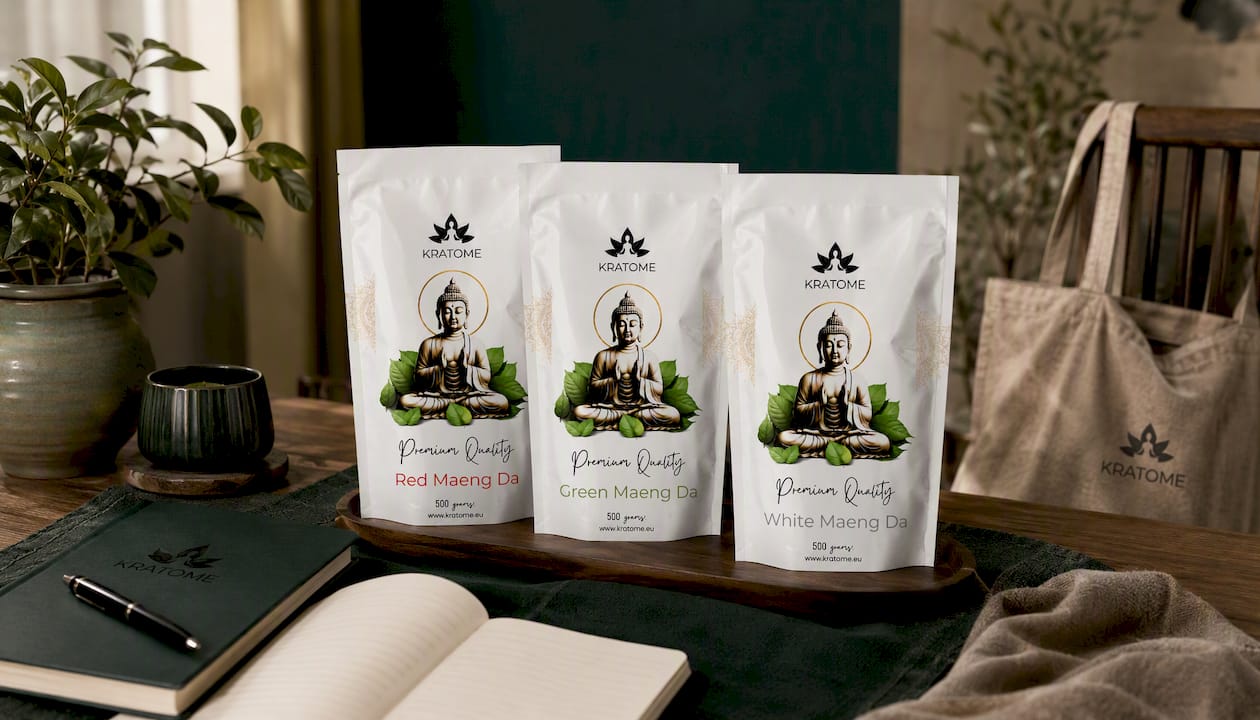
Red Maeng Da suits readers looking for relaxation or pain relief, given its more sedative-leaning alkaloid balance; check the current batch’s lab results before your first order. Green Maeng Da offers a middle-ground option many users reach for when they want mood support without heavy sedation, available with full batch testing. White Maeng Da leans towards alertness and energy, a cleaner alternative to caffeine for some users, and it’s worth reviewing the alkaloid breakdown for your specific batch.
Whichever strain you choose, start with 1 to 2 grams rather than a full dose, don’t mix it with alcohol or any sedating medication, and speak to a doctor first if you have liver, kidney, cardiac, or seizure-related health conditions. If in doubt about a batch, our lab reports page has the certificate for the product in front of you, not a generic industry average.
Sources
The clinical claims in this article draw on the pharmacology review in PMC, the FDA’s public safety guidance, the EUDA’s kratom drug profile, and the StatPearls clinical reference on kratom, among the peer-reviewed sources linked throughout the body text above.
This article is general information, not a substitute for advice from a qualified doctor. Consult a qualified healthcare professional about your own circumstances before acting on anything here.
- FDA and kratom
Recommended
- Kratom Lab Reports Europe | Lab-Tested Kratom
- Kratom Information Guide | Kratom Strains & Products
- Kratom Alkaloids Explained: Mitragynine & 7-Hydroxymitragynine Effects
- Buy Kratom Online Europe & UK – Premium Lab-Tested Kratom
Disclaimer: This article is for educational and informational purposes only. Kratom is sold by Kratomvia as a botanical specimen for study and collection purposes, and is not intended, approved, or authorised for human consumption in the European Union. Our kratom is sold as a soap accessory and collectible item.


