

Smell Proof Kratom Bags
13 September 2026

For reliable odor containment, choose a metallized mylar pouch or a carbon-lined resealable bag built with a verified, full-width heat seal and clean zipper engagement. The barrier film and the seal quality determine performance, not bag thickness or marketing claims. Sizes and closures matter too, but material and construction come first. The sections below walk through how to verify performance and pick the right format before you commit to a bulk order.
TL;DR:
- Foil-laminate bags with full-width heat seals and clean zippers provide the most reliable odor containment, especially for strong aromas.
- Reusable carbon-lined bags cost more initially but are better suited for daily access, while bulk pouches are ideal for single-use shipping instead of reusability.
- Proper size selection minimizes trapped air and pressure on the seal, with gasket-sealed zippers offering better odor protection for repeated opening.
- Visual seal inspection and testing with scented items before bulk orders help identify leaks, as seal quality is more critical than material thickness.
- Handling practices like cleaning zippers and avoiding punctures extend bag performance, but no bag is completely smell-proof forever.
Table of Contents
- Which Smell Proof Bags Fit Your Use Case?
- What Materials Actually Stop Odor From Escaping?
- How Do You Choose the Right Size and Closure?
- How Do You Verify Smell Proof Performance Before Buying?
- Handling Habits That Keep Bags Performing
- A Practitioner’s View: Smell-Proofing Is a System, Not a Material
- Kratomvia’s Discreet Packaging and Accessory Options
- Where to Go for Deeper Packaging Specs
- Sources
- FAQ
Which Smell Proof Bags Fit Your Use Case?
Not every odor-control problem calls for the same product. Matching format to purpose is the fastest way to avoid an expensive mistake.
Stand-up mylar pouches work best for retail shelves and long-term storage. Their rigid base, printable surface, and strong barrier film make them a natural fit for products that need to look presentable and stay sealed for months. Carbon-lined resealable pouches suit short-term transport or discreet daily carry better, since the carbon layer keeps absorbing trace vapor even after the bag has been opened and reclosed a few times.
Padded smell-proof cases and backpacks serve a different job entirely. They’re built for people who need repeated access throughout the day, and the better ones pair a carbon lining with a lockable zipper for basic security, not just odor control. Smell-proof backpacks that combine multi-layer carbon systems with premium zippers tend to hold up better at the seams than budget alternatives, since the zipper track is usually where leaks start.
The trade-off worth understanding before you buy:
- Single-use printed mylar pouches offer the strongest barrier per dollar but can’t be reopened and resealed reliably once cut.
- Reusable carbon-lined bags cost more up front but pay off for anyone accessing the contents daily.
- Cases and backpacks add convenience and portability but rarely match a heat-sealed pouch’s barrier performance.
- Bulk retail pouches make sense for businesses shipping sealed, single-use units to customers rather than reusing the same bag.
What Materials Actually Stop Odor From Escaping?
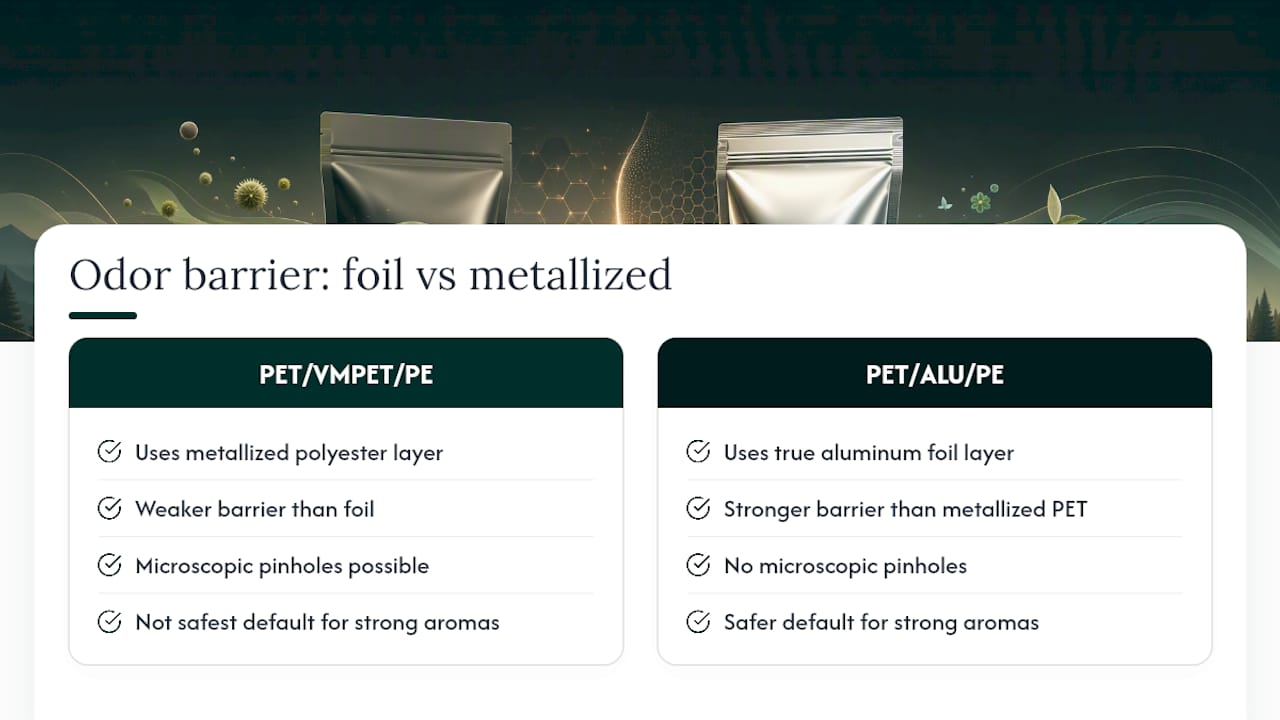
The film laminate is where odor control either works or fails. Two structures dominate the market: PET/VMPET/PE, which uses a metallized polyester layer, and PET/ALU/PE, which uses a true aluminum foil layer. PET/ALU/PE laminates provide a stronger barrier than metallized PET because foil has no microscopic pinholes the way vapor-deposited metallization sometimes does. If you’re packaging anything with a strong aroma profile, foil-based film is the safer default.
Activated carbon liners add a second line of defense, especially in smaller pouches and cases. Loose carbon fabric works, but triple-layer carbon liners paired with gasket-sealed zippers deliver more consistent results, and field testing on compact carbon-lined pouches shows strong containment performance for pocket-size and carry formats. Carbon isn’t permanent, though. Repeated exposure to high-volatility contents or humid storage gradually reduces its adsorption capacity, so a liner that performed well on day one may need replacement after months of heavy use.
None of this matters if the seal is bad. A continuous laminate with a hairline gap in the heat seal performs worse than a slightly thinner film with a flawless seal. Full-width heat seals and complete zipper engagement are what actually stop scent molecules from finding a path out, and construction quality across the film, seal, and closure determines real-world odor containment far more than headline material specs.
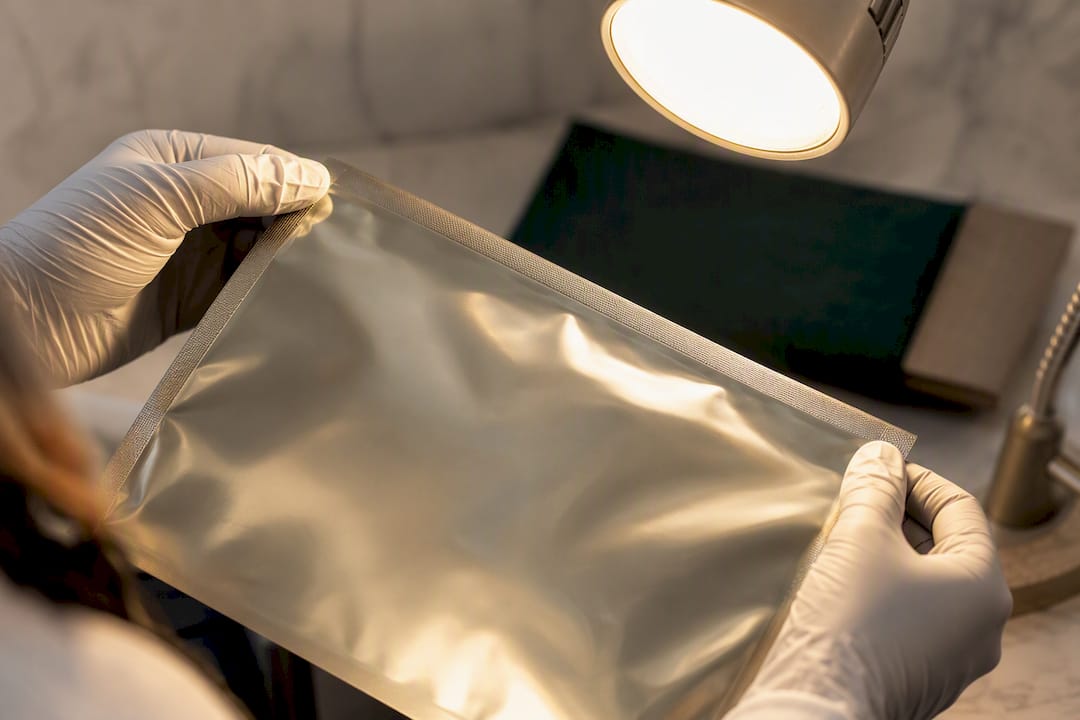
Pro Tip: Hold a sample pouch up to a bright light and check the seal line edge to edge. Any thin or shiny spot where the laminate looks stretched is a likely pinhole waiting to happen.
How Do You Choose the Right Size and Closure?
Oversized bags are one of the most common buying mistakes. Excess headspace means more air trapped inside, and that air puts pressure on the seal every time the bag gets compressed in transit. Size the pouch to leave minimal empty space around the contents, and always check actual dimensions and suggested fill weight rather than trusting a vendor’s size name alone, since terms like “mini” or “quart” vary widely between brands.
Closure choice matters just as much as size:
- Standard press-and-lock zippers work fine for everyday odor containment when the track stays clean.
- Gasket-sealed or rubber-sealed zippers add real protection for aromatic contents that see repeated opening.
- Child-resistant closures are a separate compliance requirement, not an odor-control feature. Odor containment and child resistance are tested against different standards, so don’t assume one guarantees the other.
Gussets and clear windows are worth weighing carefully. Gussets improve capacity without hurting seal integrity, but windows introduce an extra seam and a different material into the barrier, which is one more place for a leak to start. If discretion is the priority, skip the window.
How Do You Verify Smell Proof Performance Before Buying?
A quick sample check catches most problems before they become a bulk-order regret.
- Inspect the seal visually. Run a finger and your eyes along the entire seam looking for gaps, wrinkles, or uneven pressure marks.
- Test the zipper engagement. Open and close it a dozen times, checking that both sides lock together fully across the whole width, not just the corners.
- Run a closed-air check. Seal an empty bag with a strongly scented item nearby for a few hours in a closed room, then check the exterior for any leak before trusting it with real contents.
For larger orders, don’t stop at a visual check. Requesting a production sample run and testing filled bags under real storage or transit conditions catches pinholes and seal defects that a desktop spec sheet won’t reveal. A reputable supplier should hand over material spec sheets on request and be willing to produce a small proof batch before committing to a full production run.
Handling Habits That Keep Bags Performing
Seal quality and film integrity only hold up if the bag is handled correctly.
Wipe zipper tracks clean before sealing. Any residue or debris caught in the teeth prevents full engagement, which is one of the most common causes of a “smell proof” bag that isn’t. Fill bags carefully rather than jamming material into corners, since sharp or bulky items can puncture the laminate from the inside. Store finished bags flat and away from heat, which helps preserve carbon liner life and keeps the film from stretching at the seams.
- Clean zippers before every seal cycle.
- Avoid sharp-edged contents that can pierce the laminate.
- Store away from direct heat and humidity to protect carbon performance.
Pro Tip: If you’re reusing a carbon-lined bag daily, give it occasional airflow when empty. It helps the carbon layer stay effective longer than sealing it shut between every use.
A Practitioner’s View: Smell-Proofing Is a System, Not a Material
A perfect barrier film with a dirty zipper track fails just as badly as a cheap film with a good seal. The seal is where most real-world failures happen, not the laminate itself. Kratomvia builds this system thinking into how it approaches packaging accessories and lab-tested quality control, and discreet shipping reflects the same standard. For any high-aroma fill, insist on a verified sample before scaling an order.
— Kratome
Kratomvia’s Discreet Packaging and Accessory Options
Kratomvia sources fragrance-sensitive accessories with the same discretion and quality control that goes into every batch it ships. If you’re packaging aromatic botanicals for soap making, the essential oil collection covers scent profiles like peppermint and orange that pair naturally with discreet, odor-controlled packaging.

Fill weight consistency also affects seal stress, which is why a precision digital scale helps avoid overfilling pouches before sealing. Kratomvia backs every batch with published lab reports so you can check documentation before committing to a larger order, the same verification standard this guide recommends for any supplier. Browse the red kratom and green kratom collections to see the packaging standard in practice, or reach out directly to request samples or discuss custom sizing for wholesale accessory orders.
Where to Go for Deeper Packaging Specs
For film construction details and custom production questions, the manufacturer pages linked throughout this guide give the clearest technical breakdowns.
- PET/VMPET/PE and PET/ALU/PE film specifications for buyers comparing laminate structures.
- Custom production and sample-testing guidance for bulk or wholesale orders.
- Storage conditions for aromatic botanicals for readers pairing packaging choices with proper storage.
Sources
- Smell Proof Mylar Bags | Odor-Resistant Custom Pouches
- Custom Smell Proof Mylar Bags | Powerful Odor Barrier Bags
- Essential Stash Bag — Compact Smell-Proof Pouch – FireBar Labs
FAQ
Is there such a thing as a truly smell proof bag?
No bag is completely impermeable forever, but a foil-laminate pouch with a full-width heat seal and a clean zipper comes close enough for practical purposes. Performance depends on the film, the seal, and how carefully the bag was filled and closed.
What kind of bags keep scent-detecting dogs from noticing?
Bags built with a foil laminate (PET/ALU/PE) and a properly gasket-sealed zipper block far more vapor than standard plastic bags or metallized-only films. No consumer packaging is marketed or tested as a guaranteed defeat against trained detection dogs, so treat any such claim with skepticism.
Are regular zip-top kitchen bags smell proof for wildlife encounters?
Standard kitchen zip bags are not designed as odor barriers and are not a substitute for purpose-built smell-proof or bear-resistant containers. Their thin single-layer film and simple press-seal zipper allow scent to pass through far more easily than a laminated, heat-sealed pouch.
Does bag thickness matter more than the seal?
Seal quality and film continuity matter more than raw thickness. A thick bag with a weak or uneven heat seal will leak faster than a thinner bag with a flawless, full-width seal.
How long does an activated carbon liner stay effective?
Carbon liners have a finite adsorption life that shortens with heavy use, high-volatility contents, or humid storage conditions. Replacement or re-activation becomes necessary once containment noticeably weakens.
Recommended
- Essential Oils for Kratom Soap Making EU & UK
- Digital Scale for Kratom Manufacturing | Precision Weighing
- Transparent Glycerin Soap Base for Kratom Soap Making
- Heart Silicone Soap Mold for Kratom Soap Making
Disclaimer: This blog is intended for educational and informational purposes only. The content provided is not intended to promote, recommend, or suggest human consumption of kratom or any other product. Our products are sold exclusively for their intended purposes as described on our website. This information should not be interpreted as medical advice, and we encourage readers to consult qualified professionals for any health-related questions.


