

Hulu Kapuas Kratom
9 September 2026

Hulu Kapuas denotes a specific origin, the Kapuas Hulu region of West Kalimantan on the island of Borneo, not a separate botanical species. Red, green, and white labels on Hulu Kapuas products come from the same trees and reflect differences in harvest timing and post-harvest processing, not different plants. The only reliable way to confirm a product’s authenticity is traceable sourcing paired with a batch-specific lab report.
TL;DR:
- The white, green, and red Hulu Kapuas labels reflect different post-harvest drying processes rather than distinct plant strains, with actual differences caused by drying time and method.
- Hulu Kapuas sourcing is limited by geographic constraints, with supply impacted by seasonal flooding and boat-dependent harvest logistics in West Kalimantan, not artificial scarcity.
- A batch-specific Certificate of Analysis is essential for verifying alkaloid content, contaminants, and sourcing accuracy, and generic or incomplete reports hold little value.
- Variability in vein color and effects across vendors results from inconsistent industry drying standards, meaning batch-to-batch differences matter more than label color or region claims.
- Authenticity relies on transparent documentation linking harvest, processing, and testing, not just regional names or marketing claims on product labels.
Table of Contents
- What Does Hulu Kapuas Kratom Mean by Color?
- Where Is the Kapuas Hulu Region and Why Does It Matter?
- How Is Hulu Kapuas Kratom Harvested and Processed?
- What Alkaloids Does Hulu Kapuas Kratom Contain, and How Do Labs Verify Them?
- How Can You Verify Hulu Kapuas Authenticity Before Buying?
- What Do Kratomvia’s Lab Reports and Sourcing Records Show?
- What Does “Hulu Kapuas” Actually Denote as a Kratom Origin?
- Why Do Vein Colors Vary So Much Between Vendors?
- Requesting Documentation: What a Legitimate COA Should Include
- What Product Forms Does Hulu Kapuas Come In, and How Available Is It?
- Our Take: Trust the Paperwork, Not the Postcard
- Explore Kratomvia’s Tested Hulu Kapuas and Kratom Catalog
- Sources
What Does Hulu Kapuas Kratom Mean by Color?
“Hulu Kapuas” tells you where the material grew. The color label attached to it (red, green, or white) tells you how the leaf was handled after harvest. Both pieces of information matter, but they answer different questions, and vendors that blur the two are usually oversimplifying for marketing purposes.
The color system tracks two variables: when the leaf was picked and how it was dried afterward.
- Red vein labels typically come from more mature leaf that undergoes a longer, often slower drying process, which allows more time for oxidation to darken the vein and leaf material.
- Green vein labels usually reflect a mid-length drying cycle, often a blend of indoor and brief outdoor exposure, aimed at preserving more of the leaf’s original green coloration.
- White vein labels generally involve leaf dried quickly indoors or under controlled conditions with minimal light exposure, which limits oxidation and keeps the stem and vein pale.
None of this is standardized across every farm or exporter. Two batches labeled “green Hulu Kapuas effects” from different suppliers can come from meaningfully different drying protocols. That is one reason a strain name alone, without a batch-level lab report, tells you less than most buyers assume. A resource like Kratomvia’s strain explainer walks through how these vein classifications map onto processing choices more broadly.
Where Is the Kapuas Hulu Region and Why Does It Matter?
Kapuas Hulu sits in the far eastern interior of West Kalimantan, Indonesian Borneo, following the upper reaches of the Kapuas River toward the Malaysian border. The region’s geography is what actually produces the traits vendors market under the Hulu Kapuas name.
- Harvesting depends heavily on river access, since many groves sit along narrow riparian corridors reachable mainly by boat.
- Alluvial soils deposited by seasonal flooding, combined with dense forest canopy and heavy rainfall, shape how the trees grow along the riverbank ecosystem.
- Because usable riparian land is narrow compared with the flatter, more accessible inland farms used for higher-volume varieties, total output stays limited.
That geography explains the recurring claim about scarcity. Supply is genuinely constrained by transport logistics and seasonal flooding windows that limit when harvest crews can reach certain groves, not by artificial scarcity marketing.
How Is Hulu Kapuas Kratom Harvested and Processed?
Processing determines the final vein classification, and the workflow follows a fairly consistent sequence across most Southeast Asian operations, even when specific timing varies by farm.
- Harvest and sorting. Crews select leaves by maturity, with older, thicker leaves typically set aside for red-labeled processing and younger leaves reserved for green or white classifications.
- Drying. This is where the color outcome is actually decided: full sun drying accelerates oxidation and produces darker material, shade or indoor drying slows it for a green result, and tightly controlled indoor drying with minimal light produces the palest, white-leaning output. Some processors use a brief fermentation-style resting period before final drying to intensify color and aroma.
- Grinding and sieving. Dried leaf is milled to a consistent particle size and passed through sieves to remove stem fragments and uneven pieces.
- Batch labeling. Finished powder gets assigned a lot or batch number, which should carry through to any lab documentation attached to that specific production run.
Skipping or rushing any of these steps changes the finished product, which is why two “jongkong kratom effects” batches, or the closely related what is jongkong kratom question buyers often ask, can vary even from the same supplying region.
What Alkaloids Does Hulu Kapuas Kratom Contain, and How Do Labs Verify Them?
Mitragyna speciosa leaf contains a range of naturally occurring alkaloids, with mitragynine as the dominant compound and 7-hydroxymitragynine present in much smaller concentration, alongside minor alkaloids like speciogynine and paynantheine. A peer-reviewed pharmacology review lays out this composition in detail, and it forms the baseline against which any lab report should be checked. Additional characterization work on mitragynine’s chemical structure supports the analytical methods labs rely on today.
A properly run Certificate of Analysis (COA) is the only document that actually confirms what’s in a batch of material, rather than what a listing claims is in it.
A complete COA typically reports:
- Alkaloid concentration, usually measured through liquid chromatography tandem mass spectrometry (LC-MS/MS), a method precise enough to detect trace-level compounds.
- Heavy metal screening, since botanical imports face documented contamination scrutiny under actions like FDA import alert 1137.
- Microbial testing for contaminants like salmonella or E. coli.
- The testing lab’s name, the exact method used, the test date, and a batch or lot number that ties the report to one specific production run.
A COA missing a batch number or lab identity is close to worthless as evidence. It could describe any batch, from any supplier, at any point in time.
How Can You Verify Hulu Kapuas Authenticity Before Buying?
Verification comes down to documentation, not marketing language. Run any listing through a short checklist before trusting the “Hulu Kapuas” name on it.
- Does the listing disclose the specific growing region, ideally naming Kapuas Hulu or West Kalimantan rather than a vague “Borneo” catch-all?
- Is there a direct link to a batch-specific COA, not a generic PDF reused across multiple product listings?
- Does the report name an identifiable, accredited testing lab rather than an unnamed “third-party lab”?
- Can the supplier speak to traceability, meaning the chain from farm or cooperative to export to your order?
- Does the price and stated availability track realistically with the supply constraints of a narrow riparian growing zone?
Watch for red flags: identical COAs across unrelated strain names, testing dates that never update, or pricing so low it implies volume the region cannot geographically support.
Pro Tip: Save the COA’s lab name and test date, then check if that lab publishes any accreditation information independently. A legitimate lab is usually verifiable outside the vendor’s own website. A step-by-step walkthrough like this six-step COA check is a useful second reference when a report looks unfamiliar.
What Do Kratomvia’s Lab Reports and Sourcing Records Show?
Some retailers source from growers in Southeast Asia and run independent laboratory testing on batches before product listing. That structure exists specifically to give buyers something firmer to check than a strain name.
- Each batch may carry its own testing record rather than a single reused report applied across the catalog.
- Sourcing details may be disclosed rather than hidden behind generic regional claims.
- Shipping across Europe and the UK may be handled discreetly, with packaging that does not advertise contents.
UK legal status: Kratom is not controlled under the UK Misuse of Drugs Act, and possessing it is not an offence. However, since 2016 kratom falls under the Psychoactive Substances Act, which makes it an offence to sell, supply or import it into the UK. Regulations and their enforcement can change over time, so it's advisable to stay updated on any potential amendments.
Readers who want to inspect the documentation directly can review Kratomvia’s lab reports for batch-level COAs, or work through the broader kratom information guide for background on how sourcing and processing connect to what shows up on a certificate.
What Does “Hulu Kapuas” Actually Denote as a Kratom Origin?
“Hulu” translates roughly to “upstream” or “upper reaches” in Indonesian and Malay, and “Kapuas” refers to the Kapuas River. Put together, Hulu Kapuas names a place, the upstream stretch of the Kapuas watershed in West Kalimantan, not a cultivar, hybrid, or genetically distinct tree.
This matters because kratom taxonomy is genuinely simple at the species level. All commercial kratom traces to Mitragyna speciosa. Every regional name you see attached to a strain (Hulu Kapuas, Kapuas kratom strains generally, Jongkong, Maeng Da) describes where the tree grew and how the leaf was processed, not a different plant. Green Jongkong effects and green Hulu Kapuas effects both start from the same species; any distinction comes down to microclimate and post-harvest handling in two different parts of Borneo.
Vendors sometimes use “Hulu Kapuas” loosely to suggest premium status without disclosing whether the material actually came from that watershed. That is where the earlier point about geography becomes practical rather than academic: a supplier who can name the specific river district and describe how material moves from harvest to export is making a claim you can actually evaluate. A supplier who just prints “Hulu Kapuas” on a label with no further detail is making a claim you cannot check at all. Treat the region name as a starting point for questions, not a finished credential on its own.
Why Do Vein Colors Vary So Much Between Vendors?
Because there’s no industry-wide drying standard, “green” from one exporter and “green” from another can represent different oxidation windows and different finished color intensity. This is the single biggest source of confusion for buyers comparing Hulu Kapuas effects or green Borneo effects across multiple sellers.
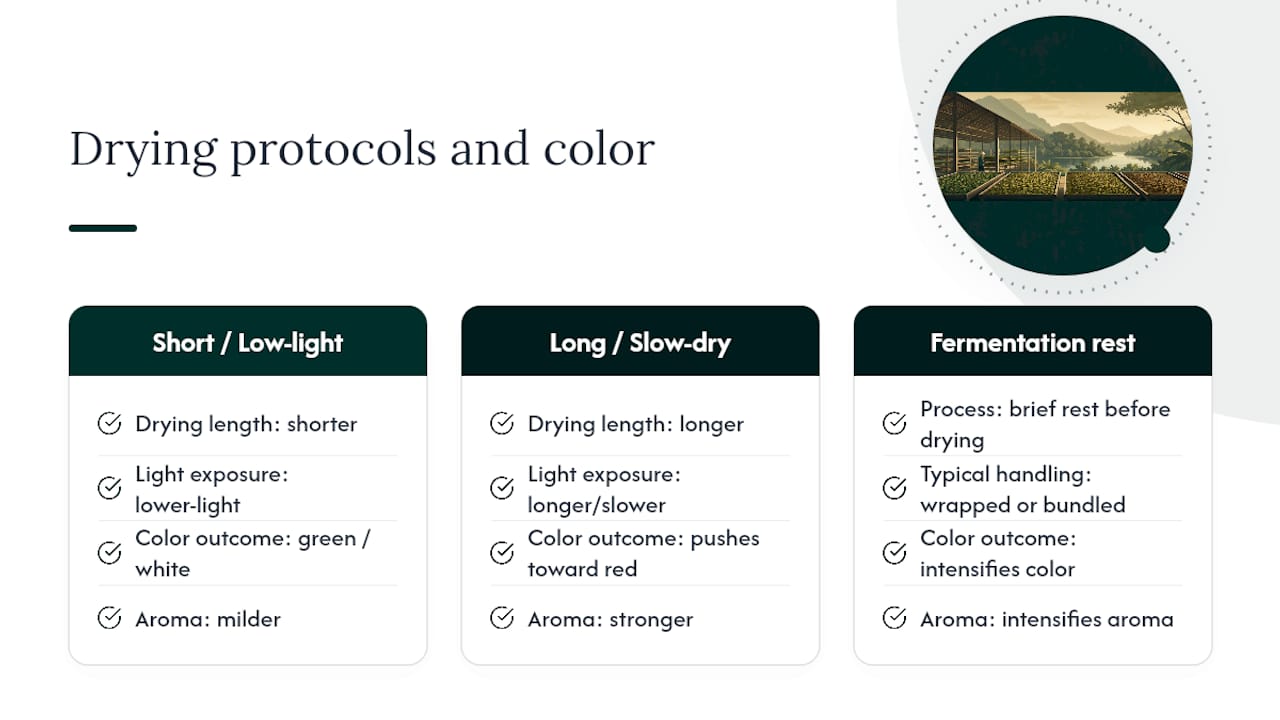
The underlying logic still holds across the industry: shorter, lower-light drying preserves more chlorophyll and produces green or white classifications, while longer exposure and slower drying pushes material toward red. Some processors also use a brief fermentation-style rest, sometimes wrapped or bundled, before final drying, which most vendors report intensifies color and aroma more than straightforward air drying does.
A few practical implications follow from this:
Buyers comparing a green Borneo kratom listing against a green Hulu Kapuas listing are really comparing two different origins that both used a green-leaning drying protocol, not two points on a single standardized scale. Batch-to-batch variation within the same vendor is also normal. Weather during drying season, humidity levels, and even the specific crew running a harvest can shift outcomes slightly from one lot to the next. That’s precisely why batch-specific COAs matter more than the strain name printed on the label. The strain overview at Kratomvia breaks down how these labels function across the wider catalog, including how red, white, and green distinctions apply beyond Hulu Kapuas specifically.
Requesting Documentation: What a Legitimate COA Should Include
A COA request should never feel like an unusual ask. Any vendor confident in their supply chain will have this documentation ready, tied to the exact batch you’re purchasing rather than a catalog-wide average.
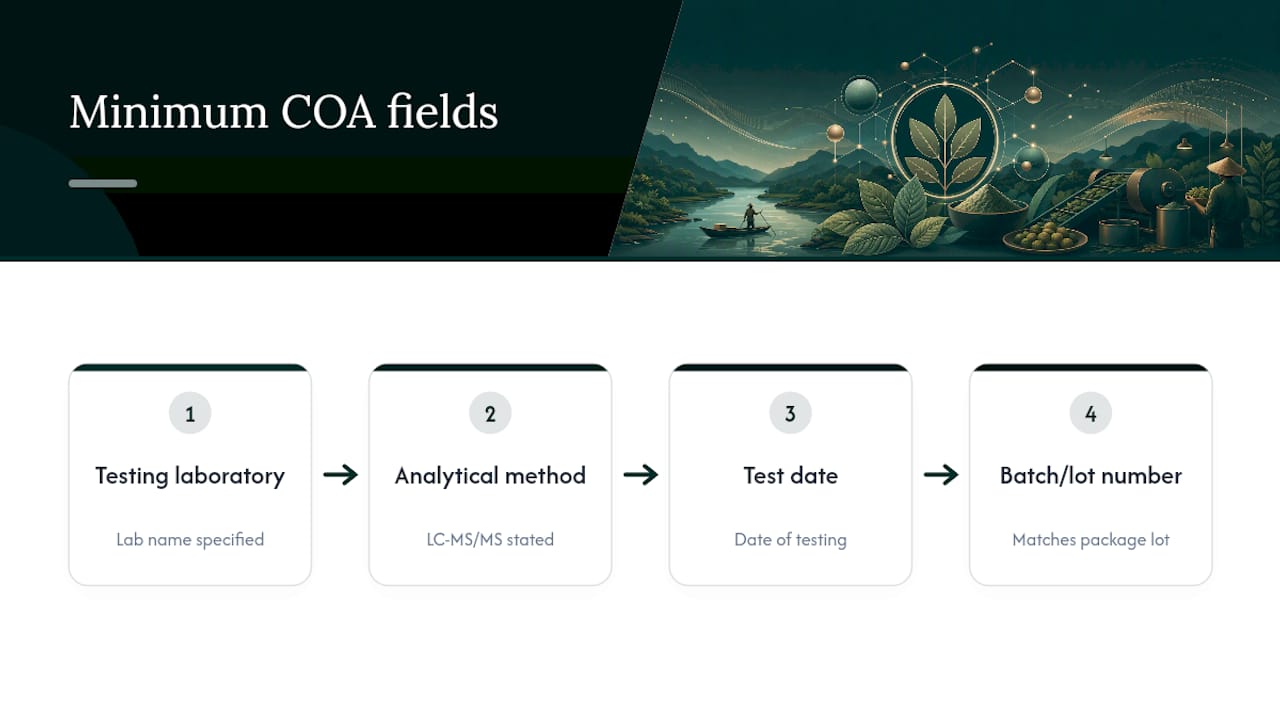
At minimum, a usable COA identifies the testing laboratory by name, states the analytical method (LC-MS/MS is the standard for alkaloid quantification), lists the test date, and references a batch or lot number matching what’s printed on your specific package. Reports lacking any one of these elements should be treated as incomplete, regardless of how professional the formatting looks.
Traceability extends beyond the lab report itself. A vendor who can describe the general path from grower to export facility to warehouse gives you more confidence than one who simply states “sourced from Borneo” with no further detail. This doesn’t require a full supply-chain audit on your part. It requires the vendor being willing to answer the question when you ask it. Guides like how to choose quality kratom cover the broader evaluation process, including how to weigh vendor transparency against price and marketing claims.
Regulatory context reinforces why this documentation matters. The DEA’s kratom factsheet and the EMCDDA’s kratom drug profile both underscore that consistent chemical characterization, the kind a proper COA provides, is central to how agencies monitor botanical products moving through international trade.
What Product Forms Does Hulu Kapuas Come In, and How Available Is It?
Powdered leaf is the dominant commercial form for Hulu Kapuas material, ground and sieved after drying into a consistent texture suitable for packaging and further processing. It shows up far more often in this form than as whole or crushed leaf, since powder standardizes more easily for batch testing and labeling.
Availability runs tighter than higher-volume Borneo or Sumatra-origin material, largely because of the geographic constraints already covered: narrow riparian growing zones, boat-dependent harvest logistics, and seasonal flooding that limits when crews can work certain groves. That scarcity is a legitimate origin story, but it’s also one that gets exploited by listings claiming rare “authentic Hulu Kapuas” stock at volumes the region likely cannot support.
Buyers researching the best kratom for energy category, or comparing Hulu kratom effects across product types, will also encounter Hulu Kapuas material blended into broader “Kapuas” product lines that mix material from multiple sub-regions along the river system under one umbrella name. That’s not inherently deceptive, but it does mean the specific “Hulu” designation carries less precision in a blended product than in a single-origin batch with its own dedicated COA. When availability looks unusually generous relative to typical regional supply, that’s a signal worth cross-checking against the documentation checklist covered earlier, not a reason to assume the listing is accurate by default.
Our Take: Trust the Paperwork, Not the Postcard
Regional strain names have become a marketing shorthand that often does more obscuring than informing. The conventional approach treats “Hulu Kapuas” as if it were a flavor profile or a fixed set of properties, when it’s really a place name attached to a processing outcome that varies by farm, by season, and by drying crew.
Where most buyer guides fall short is stopping at “ask for lab tests” without explaining what a lab test should actually contain. A COA with no batch number, no named lab, and no test method is barely more useful than the strain name alone. The alkaloid science behind mitragynine and its related compounds is well characterized in the peer-reviewed literature, which means there’s no excuse for vague, unlinked lab claims in 2026.
Prioritize traceability first, region name second. A vendor who documents the path from Kapuas Hulu grove to your order, batch by batch, is offering something a postcard-pretty strain description never can. That documentation discipline can form the basis for some retailers’ testing and sourcing models.
— Kratome
Explore Kratomvia’s Tested Hulu Kapuas and Kratom Catalog
If tracing origin and reading a proper COA feels like more scrutiny than most listings survive, that’s precisely the gap Kratomvia’s catalog is built to close. Every batch ships with independent lab testing behind it, so you’re never left guessing what a strain name actually promises.
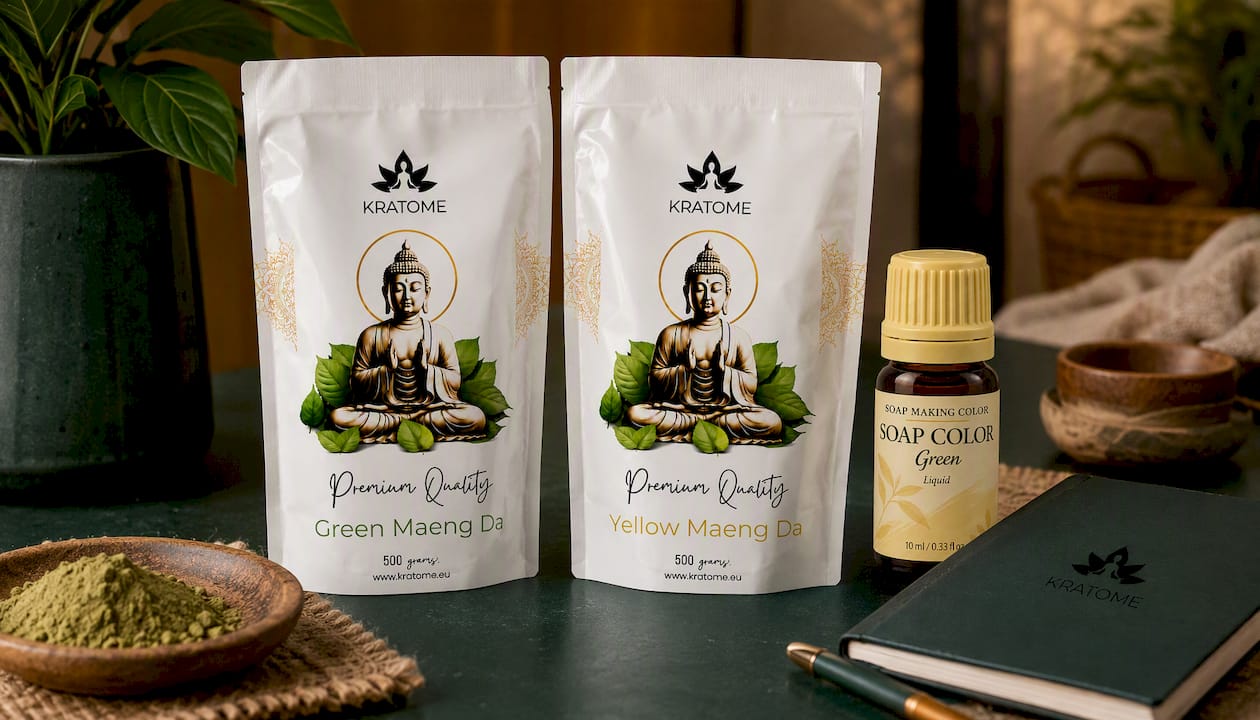
The catalog includes Green Maeng Da, sourced and tested with the same batch-level transparency covered throughout this guide, and Yellow Maeng Da, processed through a distinct drying approach and documented the same way. Batch lab reports for both are accessible directly from their product pages, so specifications aren’t buried behind a generic catalog-wide claim.
For soap makers and crafters rather than buyers focused on strain research, Kratomvia also carries a green colorant for kratom soap making, a non-ingestible accessory product built specifically for soap manufacturing rather than any personal use application. Check the product pages for full specifications and batch documentation before ordering.
This article is general information, not a substitute for advice from a qualified doctor. Consult a qualified healthcare professional about your own circumstances before acting on anything here.
Sources
- DEA: Kratom factsheet
- NCBI review: Mitragyna speciosa alkaloids and pharmacology
- EMCDDA: Kratom drug profile
Recommended
- Kratom Lab Reports Europe | Lab-Tested Kratom
- Salmonella & Kratom: Why a Batch CoA Matters
- Gold Kratom Effects: Check the COA First
Disclaimer: This blog is intended for educational and informational purposes only. The content provided is not intended to promote, recommend, or suggest human consumption of kratom or any other product. Our products are sold exclusively for their intended purposes as described on our website. This information should not be interpreted as medical advice, and we encourage readers to consult qualified professionals for any health-related questions.
Disclaimer: This article is for educational and informational purposes only. Kratom is sold by Kratomvia as a botanical specimen for study and collection purposes, and is not intended, approved, or authorised for human consumption in the European Union. Our kratom is sold as a soap accessory and collectible item.


