

Borneo Kratom Effects
14 September 2026

Borneo kratom powder brings three practical effects to soap and cosmetic formulations: an earthy green to brown color, a mild botanical aroma, and a texture that ranges from silky to gritty depending on how much you use. Getting predictable results means controlling loading rate and incorporation method. The details on concentration, technique, and supplier verification follow below.
TL;DR:
- Using Borneo kratom powder at concentrations above 3% mainly adds grit and duller color rather than increased benefits, making lower loads preferable for most formulations.
- Infused oils provide a smoother, more even distribution of color and aroma compared to raw powder, which delivers more exfoliation but with possible gritty texture.
- The powder’s color shifts from green to muted or brown in soap due to high pH and heat during saponification, affecting visual consistency.
- Suppliers should provide batch-specific certificates of analysis, including microbial, heavy metal, and particle size testing, to ensure product safety and consistency.
- Formulators should start testing with small batches at low, medium, and high loading levels to optimize texture, color, and lather effects before scaling up production.
Table of Contents
- How Does Borneo Kratom Affect Color, Scent, and Lather?
- How to Incorporate Borneo Kratom Into Soap and Cosmetic Bases
- What Concentration of Borneo Kratom Should You Use?
- What Quality Checks Should You Require From a Botanical Supplier?
- What Kratomvia Offers Formulators Sourcing Borneo Strains
- Where to Source Lab-Tested Borneo Kratom for Formulation
- Why the “More Powder, Better Bar” Assumption Falls Apart
- Sources
- FAQ
How Does Borneo Kratom Affect Color, Scent, and Lather?
Botanical powders behave differently depending on the base they meet, and Borneo kratom is no exception. In cold-process soap, the high pH of fresh saponifying soap batter tends to push plant pigments toward muted or browned tones rather than preserving the vivid green you see in the raw powder. That is a normal reaction, not a defect in the material.
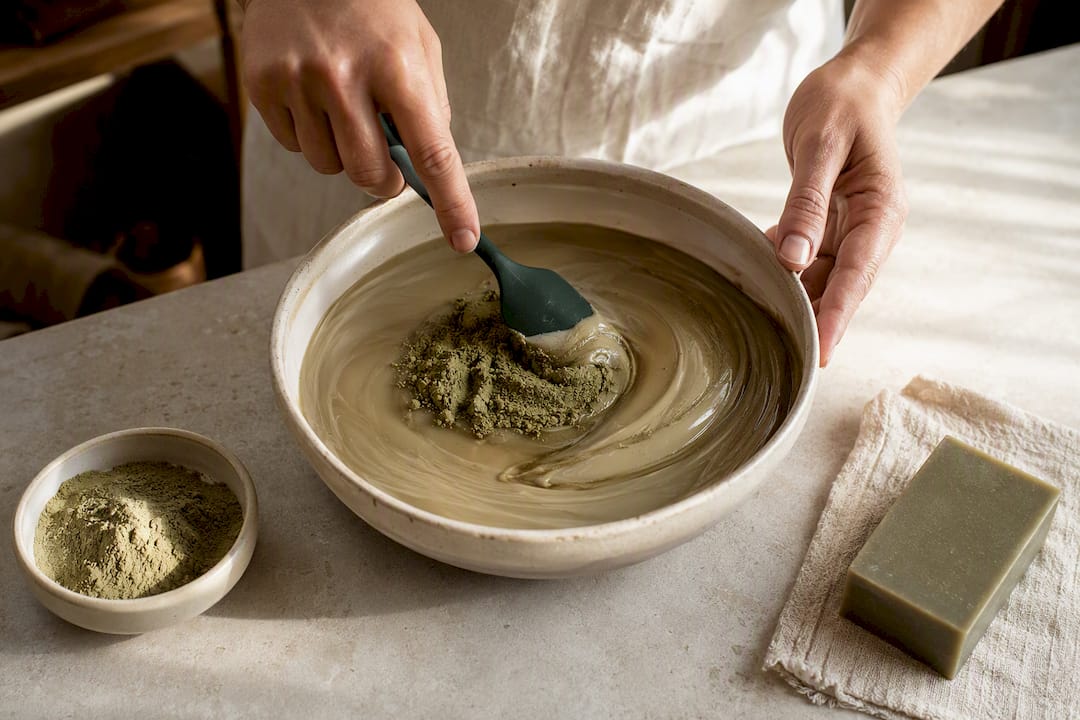
Melt-and-pour bases handle color more predictably because there is no ongoing saponification chemistry to shift pigment, though heat from melting the base can still cause some fading over time.
The aroma profile is subtle. Expect earthy, slightly green notes rather than anything sharp or floral. Most formulators layer essential oils on top to either mask or complement that base note, and lavender, cedarwood, or patchouli tend to blend well with earthy botanicals.
Lather and slip change with particulate load. Because kratom powder is not water-soluble, it sits in the bar as a suspended solid, and that changes how the surface feels against skin.
- Fine powder at low loading: barely noticeable texture, mild color tint
- Fine powder at higher loading: visible speckling, slightly grittier lather
- Oil-infused botanical: smoother distribution, softer color, less grit than raw powder
If you want a consistent tint without texture, an oil infusion strains out the coarse particles and leaves behind color and aroma. If exfoliation is the goal, raw powder at controlled particle size works better than an infusion.
How to Incorporate Borneo Kratom Into Soap and Cosmetic Bases
Getting even distribution without streaking or clumping comes down to technique, not luck. Four steps cover most formulation scenarios:
- Infuse the oil first. Combine kratom powder with a carrier oil like olive or sweet almond oil, then hold it at a low temperature (around 100 to 130°F) for several hours to a few days. This keeps heat-sensitive plant compounds intact and produces a strained oil with more even color than raw powder mixed directly into batter.
- Add at light trace in cold process. Introducing the infused oil or sieved powder once the batter reaches light trace reduces streaking, since a thinner batter distributes botanicals unevenly and a thicker one traps them in clumps.
- Disperse into melt-and-pour with glycerin first. Mix the powder into a small amount of glycerin to make a slurry, then blend that into the melted base. A light spritz of isopropyl alcohol on the surface after pouring helps eliminate trapped air bubbles around suspended particles.
- Sieve or micronize for grit control. Passing powder through a fine mesh sieve removes coarse particles that cause harsh exfoliation; finer processing produces a smoother aesthetic powder suited for facial bars rather than body scrubs.
Pro Tip: Run your infused oil test at the low end of the temperature window first. You can always steep longer for a stronger tint, but overheating a botanical infusion is hard to correct once it’s done.
For leave-on products like creams or balms where scent stability and even dispersion matter more than in a rinse-off bar, nanoemulsion-based delivery systems offer a more advanced route than a simple powder suspension, producing finer, more stable distribution of botanical material through the base.
What Concentration of Borneo Kratom Should You Use?
Loading rate is the single biggest variable separating a subtle aesthetic bar from a heavy-duty exfoliating one. These bands are starting points for testing, not fixed rules, since every base recipe and powder mesh size behaves a little differently.
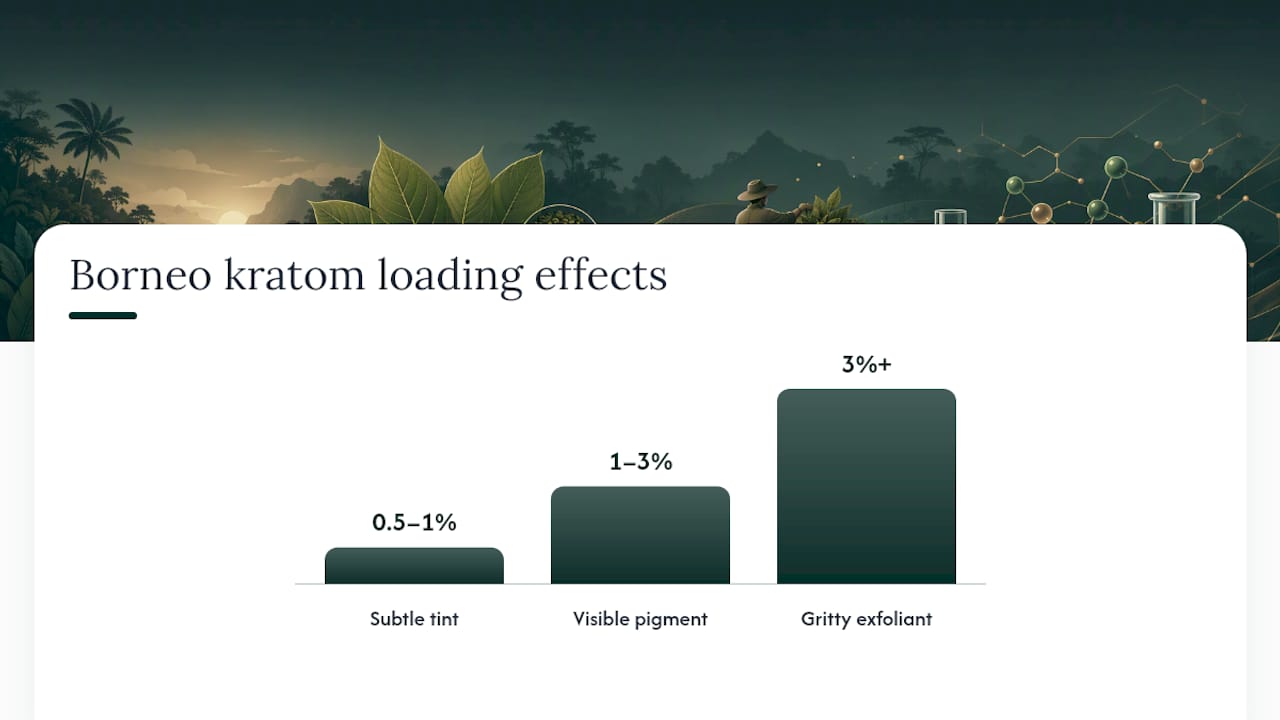
- 0.5% to 1% of total oil weight: subtle earthy tint, minimal texture change, good for facial or sensitive-skin bars
- 1% to 3%: visible pigment, light texture, suited to body bars marketed on natural ingredients
- 3% and above: noticeably gritty, functions as a mechanical exfoliant, best reserved for foot or hand bars
Practitioner guidance on botanical loading consistently notes that higher powder concentrations increase abrasive feel while lower concentrations stay purely aesthetic, which tracks with what most small-batch soapers report after their own trials.
Higher loadings also affect bar hardness and can shorten lather volume slightly, since suspended solids interrupt the smooth soap matrix. If hardness matters for your recipe, compensate with a firmer oil blend rather than backing off the botanical load.
A simple three-batch comparison settles most questions fast: mix 500-gram test batches at low, medium, and high loading, record trace time, mix temperature, and take photos at unmolding. Photograph again at one, two, and six weeks of cure, since color and texture both continue to shift as the bar dries out and the surface oxidizes slightly.
What Quality Checks Should You Require From a Botanical Supplier?
A cosmetic-grade botanical powder needs documentation behind it, not just a product photo. Before committing to a supplier for a production run, ask for the following:
- Microbial screening results, including aerobic plate count, E. coli, and Pseudomonas status
- Heavy metal testing for lead, cadmium, arsenic, and mercury
- A batch-specific certificate of analysis (COA) with a test date and batch number that matches the bag you received
- Particle size data if you need a specific mesh grade for exfoliation control
| Screening area | Why it matters for cosmetics |
|---|---|
| Microbial profile | Prevents contamination risk in water-containing bases like melt-and-pour or lotions |
| Heavy metals | Required documentation under most natural-ingredient safety frameworks |
| Batch traceability | Confirms the COA you’re holding matches the powder in your workshop |
| Particle size | Determines whether the powder reads as smooth pigment or exfoliating grit |
EU cosmetic safety guidance treats contaminant screening and toxicological documentation, including skin sensitization and phototoxicity data, as baseline expectations for natural ingredients used in leave-on and rinse-off products alike. Leave-on formulations generally warrant closer allergen disclosure than rinse-off bars, since contact time with skin is longer.
If you’re formulating for retail sale rather than personal experimentation, budget time for accelerated stability testing or, where relevant, newer safety assessment methods known as New Approach Methodologies, which are gaining traction as alternatives to traditional animal-based testing for complex natural ingredients.
What Kratomvia Offers Formulators Sourcing Borneo Strains
Kratomvia sources kratom directly from growers in Southeast Asia and puts every batch through independent laboratory testing before it reaches a formulator’s workbench. That matters more for cosmetic use than most buyers realize, since a botanical powder with inconsistent particle size or undisclosed contaminants can throw off an entire production run.
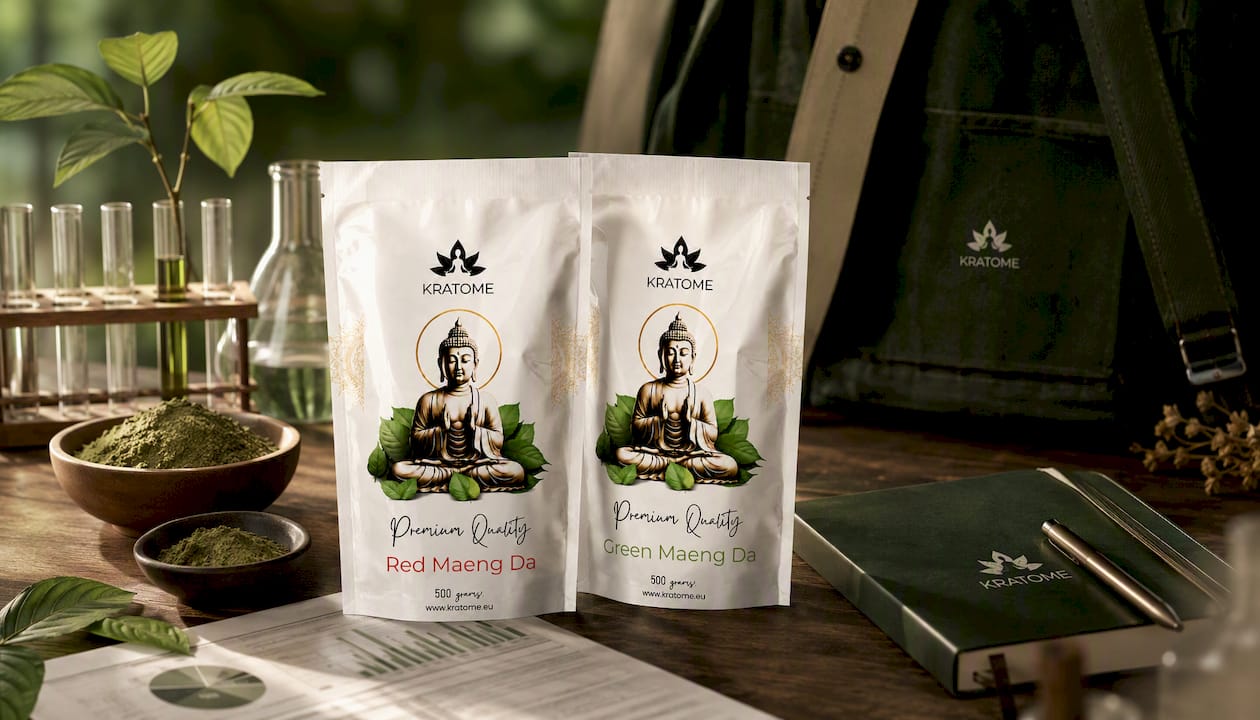
Formulators working with Borneo-style material can currently choose between Red Maeng Da and Green Maeng Da, both carried with batch-level lab documentation available on request. Before scaling any recipe, request the COA, ask about storage and handling recommendations, and start with a sample pack sized for small-batch testing rather than committing to bulk on the first order.
Where to Source Lab-Tested Borneo Kratom for Formulation
Sourcing decisions come down to one question: can you trace the powder back to a tested batch? Kratomvia’s Red Maeng Da and Green Maeng Da product pages list lab-tested botanical powder suited to soap and cosmetic formulation work, with COA requests, particle-size details, and sample-size orders all available before you scale to a production batch.
If you’re still refining your loading ranges or infusion technique, a small sample order lets you run the three-batch comparison described earlier without tying up a full kilogram of material. For questions on bulk quotes, storage guidance, or batch documentation, Kratomvia’s Kratom Information Guide covers sourcing and product details, and the contact channels listed there connect directly to the team handling wholesale and reseller orders. Reach out, request your COA, and place a sample order before committing to a full production run.
Why the “More Powder, Better Bar” Assumption Falls Apart
The instinct among new formulators is to treat botanical loading like a volume knob: more powder, more benefit, more marketable bar. That thinking breaks down fast with a material like Borneo kratom, where the visual and textural effects scale unevenly. Push past roughly 3% loading and you’re not adding more “natural goodness” to the bar, you’re just adding grit and, often, a duller color once saponification heat finishes its work on the pigment.
The formulators who get the best results tend to work backward from the end use of the bar rather than the ingredient itself. Treat concentration as a formulation decision tied to the finished product’s job, not a fixed number you copy from someone else’s recipe card.
The other overlooked piece is documentation. A lot of small-batch sellers treat lab testing as a competitor’s marketing gimmick rather than a baseline expectation. But once you’re selling a finished cosmetic product rather than experimenting at home, contaminant screening and batch traceability stop being optional extras. They’re the difference between a defensible product and a liability sitting on a shelf.
— Kratome
Sources
- Nanoemulsion-based topical delivery systems (PMC)
- Safety, sustainability and regulatory requirements for natural cosmetic ingredients (MDPI Cosmetics review)
FAQ
Does Borneo Kratom Change Color in Cold Process Soap?
Yes. The high pH and heat of saponification typically push the powder’s green tones toward a muted or browned earthy shade rather than preserving the raw powder’s original color.
What Loading Rate Gives Exfoliating Texture Without Excess Grit?
Around 1% to 3% of total oil weight generally produces visible pigment with moderate texture, while loadings above 3% shift the bar toward a noticeably gritty, exfoliating feel.
Should I Use Raw Powder or an Infused Oil?
Infused oil produces smoother color distribution and less grit, making it better for aesthetic bars, while raw sieved powder suits formulations where exfoliating texture is the goal.
What Documentation Should I Request From a Kratom Supplier?
Ask for a batch-specific certificate of analysis covering microbial screening and heavy metals, along with particle size data if you need a specific mesh grade for your recipe.
Which Borneo-Style Strains Does Kratomvia Carry?
Kratomvia currently offers Red Maeng Da and Green Maeng Da, both backed by independent batch lab testing available on request for formulators.
Recommended
- Kratom Side Effects: What Lab Testing Reveals
- Green Soap Colorant for Kratom Soap Making | Liquid Color
- Kratom Lab Reports Europe | Lab-Tested Kratom
- Gold Kratom Effects: Check the COA First
Disclaimer: This blog is intended for educational and informational purposes only. The content provided is not intended to promote, recommend, or suggest human consumption of kratom or any other product. Our products are sold exclusively for their intended purposes as described on our website. This information should not be interpreted as medical advice, and we encourage readers to consult qualified professionals for any health-related questions.


